

Key Takeaways
- Sleep hygiene won't cure insomnia on its own, but bad hygiene will sabotage every other fix you try
- Room temperature (60-67°F) and darkness are the two environmental factors that actually move the needle
- A fixed wake time is the single highest-impact habit—more than bedtime, more than screen rules
- Caffeine's half-life is about 6 hours—your 3pm coffee is still 25% active at midnight
- Most of the other advice (lavender pillows, special teas, wind-down rituals) is nice but optional
I thought sleep hygiene was pseudoscience. Seriously. For years I figured it was filler advice doctors gave when they didn't know what else to say.
Then at 31, I hit a wall. Four years of sleeping 4 hours a night during startup mode finally caught up—brain fog, constant illness, a resting heart rate that scared my doctor. I had to actually fix my sleep, and I started looking at the research instead of dismissing it.
Turns out most sleep hygiene advice is real. Some of it matters a lot. Some of it barely matters at all. The problem is that nobody ranks it for you—they just hand you a list of 15 tips like they're all equal. They're not. I'll tell you which ones actually moved the needle for me, backed by the studies I found along the way.
Fair warning: if you have chronic insomnia, these habits alone won't fix it. That usually requires CBT-I with a specialist. But skip these basics and CBT-I gets harder too.
01 What Is Sleep Hygiene?
It's the stuff surrounding your sleep. Your room setup, your habits, what you put in your body, how consistent your schedule is. Think of it like dental hygiene—flossing won't reverse a root canal, but ignoring it guarantees you'll need one.
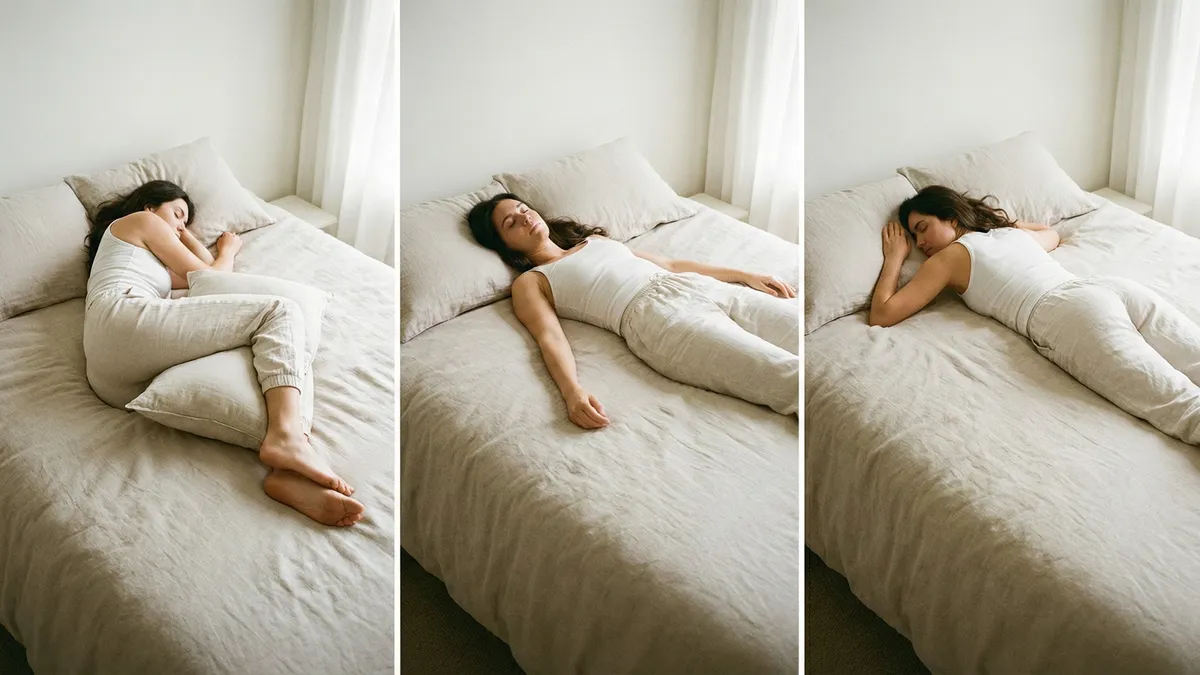
Sleep Hygiene Includes:
02 Your Sleep Environment
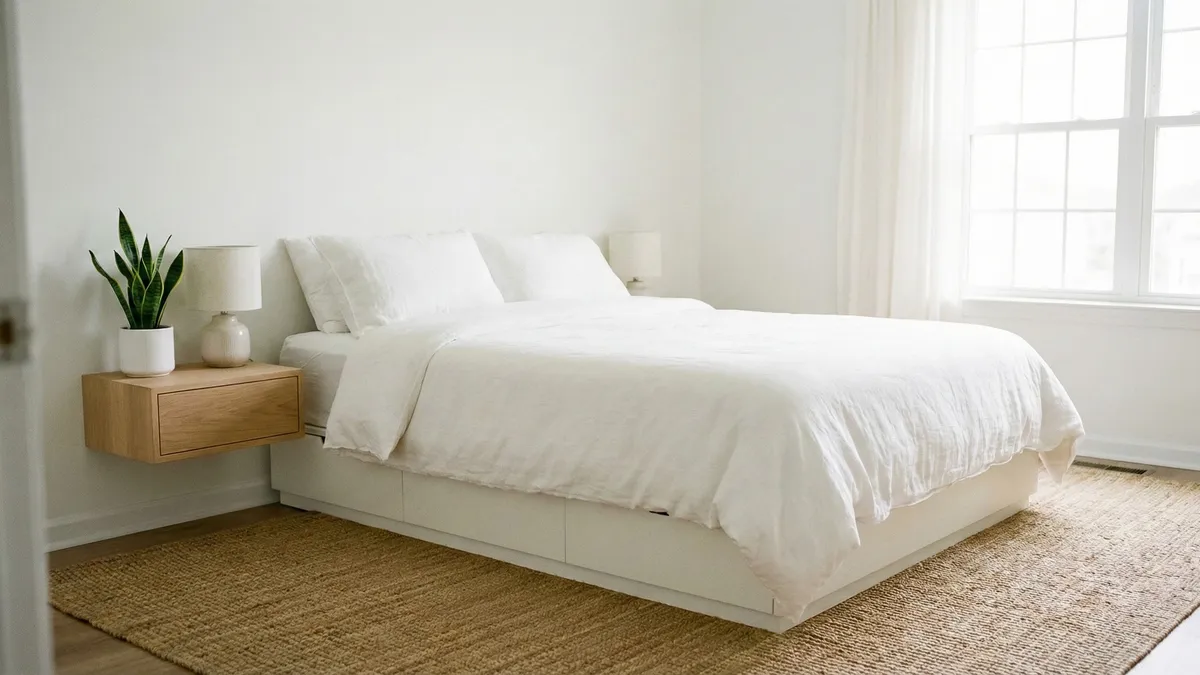
Your bedroom should serve one purpose. (Fine, two.) This isn't about making it Instagram-worthy. It's about not fighting your own biology while you're trying to sleep.
Temperature: This One Matters More Than You Think
Your core body temperature needs to drop about 1-2°F to kick off sleep. A warm room works against that process. Okamoto-Mizuno and Mizuno's 2012 review in the Journal of Physiological Anthropology found optimal sleep happens at 60-67°F (15-19°C)[1].
I was skeptical too. Then I dropped my thermostat to 65°F for a week and the difference was obvious by night three. If that feels cold, pile on blankets. The trick is cool air, warm covers.
Darkness: Non-Negotiable
Light in your bedroom suppresses melatonin. Period. Gooley et al. (2011) published in the Journal of Clinical Endocrinology & Metabolism showed that even typical room light before bedtime suppressed melatonin onset and shortened melatonin duration[2]. That charging indicator on your laptop? The streetlight leaking through your curtains? They matter more than you'd expect.
Darkness Checklist
- Get actual blackout curtains (not "room darkening"—those are a joke)
- Cover or unplug LEDs, chargers, and alarm clock displays
- Use an eye mask if you can't control the light (I travel with one)
- If you need a nightlight, red or amber only—never white or blue
- Phone goes face-down or in another room
Quiet (Or Consistent Noise)
You don't need silence. You need predictability. A fan running all night is fine. A dog barking once at 3am is not. White noise machines work because they mask the random spikes that jolt your brain awake.
"It's not noise that wakes you—it's the change in noise. A sudden silence can be as disruptive as a sudden sound."
— Dr. Mathias Basner, University of Pennsylvania
Your Bed: For Sleep Only
This comes from stimulus control therapy, a core piece of CBT-I. If you work in bed, doom-scroll in bed, argue on Reddit in bed, and binge TV in bed, your brain stops associating bed with sleep. It associates bed with being awake and wired. Use the bed for sleep and sex. That's it. Everything else happens somewhere else.
03 Timing & Consistency
If I had to rank every sleep hygiene tip by impact, this section would be number one. Your circadian rhythm runs on consistency. Mess with the schedule and your body genuinely doesn't know when to be awake and when to shut down.
The Most Important Habit: Fixed Wake Time
This is the single best thing you can do. Wake up at the same time every day. Weekends included. Even after a bad night. Even after a late night.
Why Fixed Wake Time Matters
Morning light at a consistent time calibrates your internal clock
Adenosine builds the longer you're awake—a steady wake time means you get sleepy at a steady time
Sleeping in on weekends shifts your clock by hours, making Monday morning feel like you flew to a different timezone
"But I only slept 4 hours last night." Get up anyway. Yes, the day will be rough. But you're building sleep pressure for tonight. Sleeping in to compensate just keeps the cycle going.
Bedtime Is Less Important Than You'd Think
Don't go to bed because the clock says you should. Go to bed when you're actually sleepy. There's a difference between tired and sleepy. Lying in bed wide awake at 10pm because someone told you 10pm is a good bedtime just trains your brain that bed equals frustration.
That said, try to keep bedtime within a 30-60 minute window most nights. Going to bed at 2am on Friday and 10pm on Sunday is basically giving yourself jet lag on purpose.
04 Substances That Sabotage Sleep
Caffeine: Worse Than You Realize
This one caught me off guard. Caffeine's half-life is 5-6 hours, per the Institute of Medicine's 2001 report on caffeine and mental task performance[3]. So 200mg at 3pm (one medium coffee) means 100mg still circulating at 9pm. And 50mg at 3am.
Caffeine in Your System (200mg at 3pm)
Here's what people miss: caffeine doesn't necessarily stop you from falling asleep. It degrades sleep quality. Drake et al. (2013) in the Journal of Clinical Sleep Medicine found that caffeine consumed 6 hours before bed still reduced total sleep time by over an hour[4]. You sleep, but you sleep worse. And you probably blame something else.
My rule: Nothing caffeinated after noon. If you think caffeine doesn't affect you, try cutting it for two weeks. The difference might surprise you. It surprised me.
Alcohol: The One Everyone Gets Wrong
Yes, alcohol makes you fall asleep faster. It's a sedative. But sedation is not sleep. What alcohol actually does to your sleep:
- Suppresses REM sleep, which you need for emotional regulation and memory
- Fragments the second half of your night as your body metabolizes it
- Relaxes your throat muscles, making snoring and apnea worse
- Builds a dependency loop where you start needing it to wind down
If you drink, stop 3-4 hours before bed at minimum. And be honest with yourself about how often "one glass of wine to relax" is actually happening.
Nicotine: The Forgotten Stimulant
People forget that nicotine is a stimulant. It raises heart rate and blood pressure and activates your brain—the opposite of what sleep requires. Smokers consistently show longer sleep onset, less deep sleep, and more nighttime waking in the research. Not much else to say here.
05 Daytime Habits That Affect Sleep
Morning Light Exposure
Sunlight in the morning tells your brain "it's daytime" and starts a timer. About 14-16 hours later, your body releases melatonin. Skip the morning light and that timer doesn't set properly. This is why people who work from home in dark apartments often have weird sleep schedules.
Morning Light Protocol
- Get outside within an hour of waking—even 10 minutes helps
- Overcast days still work, just stay out longer (20-30 minutes)
- Face the sky, don't stare at the sun (this shouldn't need saying, but here we are)
- If going outside isn't possible, a 10,000 lux light box is the backup option
- Leave the sunglasses off during this window
Exercise: Timing Matters
A 2015 meta-analysis by Kredlow et al. in the Journal of Behavioral Medicine confirmed what most people intuitively know: regular exercise improves sleep[5]. But intense exercise close to bedtime raises your core temperature and revs up your nervous system. Both work against falling asleep.
The simple version: Finish hard workouts at least 3 hours before bed. Gentle stretching or yoga in the evening is fine.
Napping: Proceed With Caution
Naps reduce sleep pressure. That's the whole issue. If you sleep fine at night, nap away. If you're struggling at night, cut the naps first and see what happens. If you absolutely need one:
- Under 20 minutes—stay out of deep sleep
- Before 3pm—any later and you're borrowing from tonight
- Or commit to a full 90-minute cycle, but expect to fall asleep later that night
06 Your Bedtime Routine
I'll be straight with you: bedtime routines get way more attention than they deserve. They're in the "nice to have" category, not the "this will fix your sleep" category. A consistent wind-down does help signal your brain. But it's not where I'd start if you're still drinking coffee at 4pm and sleeping in a 75-degree room.
The Buffer Zone (60-90 Minutes Before Bed)
Dim the Lights
Bright overhead lights suppress melatonin. Switch to lamps in the evening. If you have smart bulbs, set them to shift warmer and dimmer automatically. This one is easy and actually backed by the research.
Limit Screens
The blue light thing is real but overhyped—it's the stimulating content that's the bigger problem. Scrolling Twitter before bed is bad less because of the light and more because your brain is now angry about politics. If you're going to use screens, at least turn on night mode and avoid anything that gets you riled up.
Pick a Boring Activity
Reading a physical book, stretching, journaling, whatever. The specific activity doesn't matter much. What matters is doing the same thing consistently so your brain starts associating it with "sleep is next."
Warm Shower or Bath
Sounds counterintuitive, but warming your body up causes a faster cool-down afterward, which mimics the natural temperature drop that triggers sleep. Haghayegh et al. (2019) in Sleep Medicine Reviews found this helped people fall asleep about 10 minutes faster[6]. Easy win.
When You Can't Sleep
Been lying there for 20-ish minutes? Get out of bed. Don't check the clock obsessively—just estimate. Go sit in another room, do something dull in low light, and only go back to bed when you feel genuinely sleepy. The goal is to stop your brain from learning that bed is where you lie awake frustrated.
Here's What I'd Actually Prioritize
Most sleep hygiene lists treat everything as equally important. That's wrong. If you want results, focus here first:
- Fixed wake time every single day—this is the foundation, weekends included
- No caffeine after noon—you're probably underestimating how much this affects you
- Cool, dark bedroom—65°F and blackout curtains changed my sleep more than any gadget
Get those three locked in before you worry about blue-light glasses, sleep supplements, weighted blankets, or any of the other stuff the internet wants to sell you. The boring stuff comes first. Everything else is a footnote.
Sources & Further Reading
- "Effects of thermal environment on sleep and circadian rhythm." Journal of Physiological Anthropology, 31(1), 14. (2012) PubMed →
- "Exposure to room light before bedtime suppresses melatonin onset." Journal of Clinical Endocrinology & Metabolism, 96(3), E463-E472. (2011) PubMed →
- "Caffeine for the Sustainment of Mental Task Performance." National Academies Press. (2001) NCBI →
- "Caffeine effects on sleep taken 0, 3, or 6 hours before going to bed." Journal of Clinical Sleep Medicine, 9(11), 1195-1200. (2013) PubMed →
- "The effects of physical activity on sleep: a meta-analytic review." Journal of Behavioral Medicine, 38(3), 427-449. (2015) PubMed →
- "Before-bedtime passive body heating by warm shower or bath to improve sleep." Sleep Medicine Reviews, 46, 124-135. (2019) PubMed →
Recommended Resources
- Why We Sleep by Matthew Walker, PhD
- The Sleep Solution by W. Chris Winter, MD
- Sleep Foundation: sleepfoundation.org