

Key Takeaways
- Acute insomnia (under 3 months) usually passes on its own; chronic insomnia almost always needs real intervention
- CBT-I (Cognitive Behavioral Therapy for Insomnia) outperforms sleeping pills over time — and the results stick
- Most chronic insomnia is kept alive by your coping behaviors, not the original trigger
- Sleeping pills are a temporary fix with real downsides, and they don't address what's actually wrong
- Step one is tracking your sleep with a diary — you genuinely cannot fix what you haven't measured
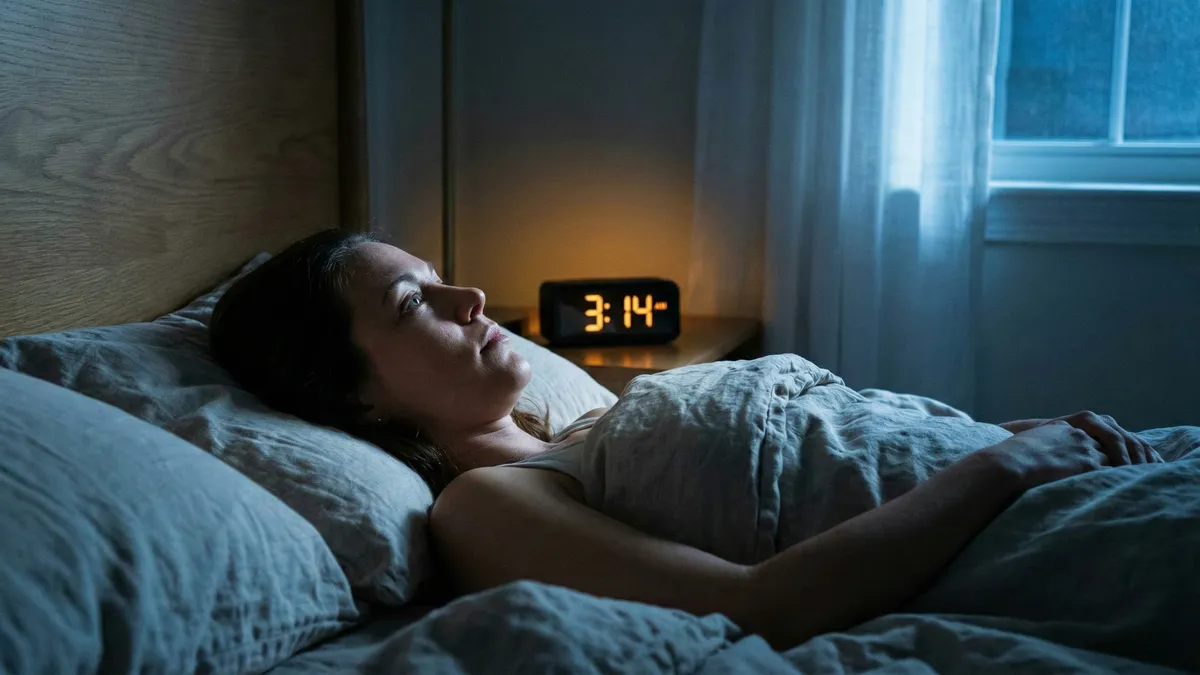
I am an insomniac. Not the cute, "I stayed up late watching Netflix" kind. The real kind — where you lie in the dark doing mental arithmetic about how many hours you'll get if you fall asleep RIGHT NOW, and the math keeps getting worse, and somehow that makes you more awake.
My insomnia started during my divorce and settled in like a terrible roommate. Three weeks in, I stopped counting sheep and started counting ceiling fan rotations. By month two, I knew the exact minute the birds started singing outside my window (4:52 AM, if you're curious). I tried melatonin. Chamomile tea. A lavender pillow spray that cost $28. Eventually Ambien, which worked beautifully until it didn't, and then the rebound insomnia hit like a freight train.
A year. That's how long I flailed around before anyone explained to me that insomnia isn't just "being bad at sleeping." It's a specific condition with specific mechanisms, and there are treatments that actually work. This guide is everything I wish I'd had at 3 AM instead of another Google search that ended at a website selling weighted blankets.
01 Types of Insomnia
The word "insomnia" gets thrown around a lot, but it actually covers very different problems. And the distinction matters because the treatment is completely different depending on what you're dealing with.
Acute (Short-term) Insomnia
Less than 3 monthsSomething happened — a job loss, a breakup, a cross-country move, a new medication — and now you can't sleep. Before the trigger, you slept fine. Once the stressor passes or you adapt, sleep usually comes back on its own.
Chronic Insomnia
3+ months, 3+ nights/weekThis is the one that gets you. The original trigger is long gone, but the insomnia has taken on a life of its own. You've started building habits around it — going to bed earlier "just in case," napping to compensate, lying in bed scrolling because you're afraid to be alone with your thoughts in the dark. Those habits become the new problem.
Presentation Types
02 Why Can't You Sleep?
In 1987, sleep researcher Arthur Spielman proposed the 3P Model of insomnia: Predisposing factors, Precipitating factors, and Perpetuating factors[1]. It's been the backbone of insomnia research ever since, and once you understand it, the logic behind CBT-I clicks immediately.
Predisposing Factors
The stuff you were born with. You can't change these, but knowing about them stops you from blaming yourself.
- Genetic tendency (runs in families)
- Anxious temperament
- Being a "light sleeper"
- Female sex (hormones affect sleep)
- Age (sleep architecture changes)
Precipitating Factors
The thing that lit the fuse. For me, it was signing divorce papers. For you, it might be something else entirely.
- Major life stress (divorce, job loss)
- Medical illness or surgery
- Travel/jet lag
- New medication
- Sleep schedule disruption
Perpetuating Factors
The habits you built to cope that are now keeping the whole thing alive. This is where CBT-I goes to work.
- Spending too much time in bed
- Irregular sleep schedule
- Daytime napping
- Anxiety about sleep
- Associating bed with wakefulness
"The trigger starts insomnia, but your response to it keeps it going. That's actually good news—responses can be changed."
— Dr. Michael Perlis, University of Pennsylvania
Here's what messed with my head the most: almost everything I did to "fix" my insomnia was making it worse. Lying in bed for hours? I was training my brain that bed equals staring at the ceiling. Sleeping in on weekends to catch up? Wrecking my circadian rhythm. Afternoon naps? Burning off the sleep pressure I needed for nighttime. Every single coping strategy was feeding the monster. And I had no idea.
03 CBT-I: The Gold Standard
CBT-I is now the first-line treatment for chronic insomnia. The American College of Physicians said so in 2016. The American Academy of Sleep Medicine agrees. So does the European Sleep Research Society[2]. Not sleeping pills. Therapy. That surprised me too.
The evidence is hard to argue with. A 2015 meta-analysis in the Annals of Internal Medicine reviewed 87 studies and found that CBT-I matches sleeping pills for short-term results — but here's the thing — the improvements last after you stop treatment. With pills, the insomnia comes right back when you quit[3]. Usually worse than before.
The Five Components of CBT-I
Sleep Restriction
This one sounds insane, and I'm going to be honest — I hated it at first. You reduce your time in bed to match how much you're actually sleeping. So if you're only getting 5 hours of sleep across 8 hours in bed, your new sleep window is 5.5 hours. Yes, you will be tired. That's the point.
Stimulus Control
Simple rules, brutally hard to follow. Only get into bed when you're genuinely sleepy (not just tired — there's a difference). If you're lying there awake for about 20 minutes, get up. Go sit in a dim room. Read something boring. Only go back when your eyelids are heavy again. Same wake time every morning, no matter what.
Cognitive Restructuring
This is the part where you learn that your 3 AM catastrophizing is lying to you. "If I don't sleep tonight, tomorrow is ruined" becomes "I've survived bad nights before and I'll manage." It sounds like positive-thinking nonsense. It isn't. It's about catching specific thought distortions and replacing them with things that are actually true.
Sleep Hygiene Education
You've heard this stuff before: cool dark room, no caffeine after noon, go easy on the alcohol, exercise regularly (not right before bed), keep a consistent schedule. On its own, sleep hygiene rarely fixes real insomnia. But skip it and you're undermining everything else.
Relaxation Training
Progressive muscle relaxation, deep breathing, body scans — pick whatever doesn't make you want to throw your phone across the room. The goal is to get your body out of that wired, tense state that insomniacs know intimately. You know the one. Exhausted but somehow vibrating.
How to Access CBT-I
04 About Sleep Medications
I took Ambien for four months. I'm not going to lecture you about how pills are poison — that's not my style and it's not true. They have a legitimate role. But I wish my doctor had been blunter with me about what they can and can't do before I spent those months relying on something that was never going to fix the actual problem.
The Reality of Sleep Medications
Most are FDA-approved for 7-10 days. Stay on them longer and you're looking at tolerance, dependence, and rebound insomnia that's worse than what you started with.
A 2012 BMJ meta-analysis of FDA submission data found that non-benzodiazepine sleeping pills add about 22 minutes of sleep on average. You feel like they help more than that, but the objective numbers are modest[5].
Pills sedate you. They don't touch the perpetuating factors keeping your insomnia alive. When you stop taking them, the insomnia is right there waiting — often angrier than before.
Falls (especially in older adults), next-day grogginess and impaired driving, complex sleep behaviors (the Ambien sleepwalking stories are real — I once made a sandwich I don't remember), dependence, and concerning long-term associations with cognitive decline.
"Sleeping pills don't produce naturalistic sleep. They sedate you. There's a difference."
— Dr. Matthew Walker, UC Berkeley
Common Sleep Medications
What I'd say if you asked me directly: if you're in an acute crisis and you need something to break the cycle so you can function at work tomorrow, medication is reasonable. Use it as a bridge to get started on CBT-I. Not as the plan. And find a doctor who actually knows sleep medicine — not all of them do.
05 Your Action Plan
Okay. Enough theory. Here's what to actually do, depending on where you are right now.
Occasional Sleep Problems (less than 1 month)
- Figure out what triggered it — stress at work? New medication? A big change? Address that if you can
- Tighten up sleep hygiene — cut caffeine after noon, keep your schedule consistent, make your room cool and dark
- Do something to wind down before bed — breathing exercises, reading, whatever works for you
- Don't start compensating — resist the urge to spend extra time in bed or take daytime naps
- Wait 2-4 weeks — acute insomnia usually resolves once the stressor fades
Persistent Problems (1-3 months)
- Start a sleep diary today — bedtime, wake time, how long to fall asleep, how many times you woke up. Do this for at least a week
- Calculate your sleep efficiency — time actually asleep divided by time in bed, times 100. Below 85% means there's real room for improvement
- Try a digital CBT-I program — Sleepio, Somryst, or the free CBT-I Coach app
- Follow stimulus control rules strictly for two full weeks. No cheating. This is the hardest part
- See a sleep specialist if nothing improves after a month of consistent effort
Chronic Insomnia (3+ months)
- Stop trying to DIY this — three months of chronic insomnia means you need professional help. That's not weakness, it's pattern recognition
- Get screened for other conditions — sleep apnea, restless legs syndrome, depression. Any of these can masquerade as insomnia
- Start formal CBT-I with someone trained in it. Not just any therapist — ask specifically about CBT-I experience
- Talk medication strategy with your doctor — as a short-term bridge while CBT-I takes hold, not as the long game
- Commit to 4-8 weeks — CBT-I isn't instant and the first two weeks can feel worse. Stay with it. It works
Start Tonight: Quick Wins
Same time every day. Weekends too. I know. I'm sorry. But this is the single most powerful thing you can do for your sleep, and it's free.
Tired and sleepy are not the same thing. Tired is "I had a long day." Sleepy is your eyelids are drooping and you're nodding off on the couch. Only the second one means it's time for bed.
Twenty minutes of lying there? Get up. Go sit somewhere else. Read the most boring thing you own. Go back only when your eyes are heavy again. This feels wrong. Do it anyway.
06 When to Get Professional Help
See a Doctor or Sleep Specialist If:
- You've been fighting this for more than 3 months and self-help isn't cutting it
- Your days are falling apart — you can't focus, your mood is tanking, you've had close calls driving
- You snore loudly, gasp awake, or your legs won't stop moving — that might be sleep apnea or restless legs, not insomnia
- Depression or anxiety showed up around the same time as the sleep problems (they feed each other)
- You've started needing alcohol or pills every night just to get any sleep at all
- You're having thoughts of self-harm — please don't wait on this one. Insomnia and depression are deeply intertwined
What a sleep specialist actually does (since I had no idea before I saw one):
- Orders a sleep study if they suspect something else is going on — apnea, periodic limb movements, etc.
- Figures out whether a medical or psychiatric condition is driving the insomnia
- Provides CBT-I directly or connects you with a therapist who's trained in it
- Manages medication safely — including helping you taper off if you've been on sleeping pills too long
The Part I Wish Someone Had Said to Me
If you're reading this at 3 AM — and statistically, some of you are — I get it. I spent a year in that exact place. Convinced I was fundamentally broken. Convinced this was just my life now.
It wasn't. Insomnia is treatable. Not "learn to live with it" treatable. Actually fixable. CBT-I works for about 80% of people who do it. I was one of them. The first two weeks were rough — sleep restriction made me feel like a zombie — but by week four I was sleeping six hours straight for the first time in over a year. I cried. In a good way.
Don't spend a year fumbling like I did. If this has been going on for more than a few weeks, start with the action plan above. Tonight if possible. The answers exist. They just don't come in a pill bottle or a lavender spray.
Sources & Further Reading
- "A behavioral perspective on insomnia treatment." Psychiatric Clinics of North America, 10(4), 541-553. (1987) PubMed →
- "Management of Chronic Insomnia Disorder in Adults: A Clinical Practice Guideline." Annals of Internal Medicine, 165(2), 125-133. (2016) PubMed →
- "Cognitive Behavioral Therapy for Chronic Insomnia: A Systematic Review and Meta-analysis." Annals of Internal Medicine, 163(3), 191-204. (2015) PubMed →
- "Efficacy of internet-delivered cognitive-behavioral therapy for insomnia." Sleep Medicine Reviews, 30, 1-10. (2016) PubMed →
- "Effectiveness of non-benzodiazepine hypnotics in treatment of adult insomnia: meta-analysis of data submitted to the FDA." BMJ, 345, e8343. (2012) PubMed →
Recommended Resources
- Say Good Night to Insomnia by Gregg D. Jacobs, PhD
- End the Insomnia Struggle by Colleen Carney, PhD
- The Sleep Book by Dr. Guy Meadows
- CBT-I Coach app (free, developed by VA)