



Key Takeaways
- Sleep quality predictably changes across the four phases of the menstrual cycle — this is normal, not a problem to fix
- Follicular phase (days 1-14 approx): estrogen rises, sleep tends to improve as the phase progresses
- Ovulation: brief core temperature spike can disrupt one to two nights of sleep
- Luteal phase (days 15-28 approx): progesterone increases sleepiness but paradoxically fragments sleep and raises body temperature
- The premenstrual week typically produces the worst sleep — less slow-wave sleep, more awakenings, elevated temperature
- Hormonal contraception changes but doesn't eliminate these patterns; synthetic progestins behave differently than natural progesterone
- PMDD dramatically amplifies sleep disruption in the premenstrual phase and warrants separate evaluation
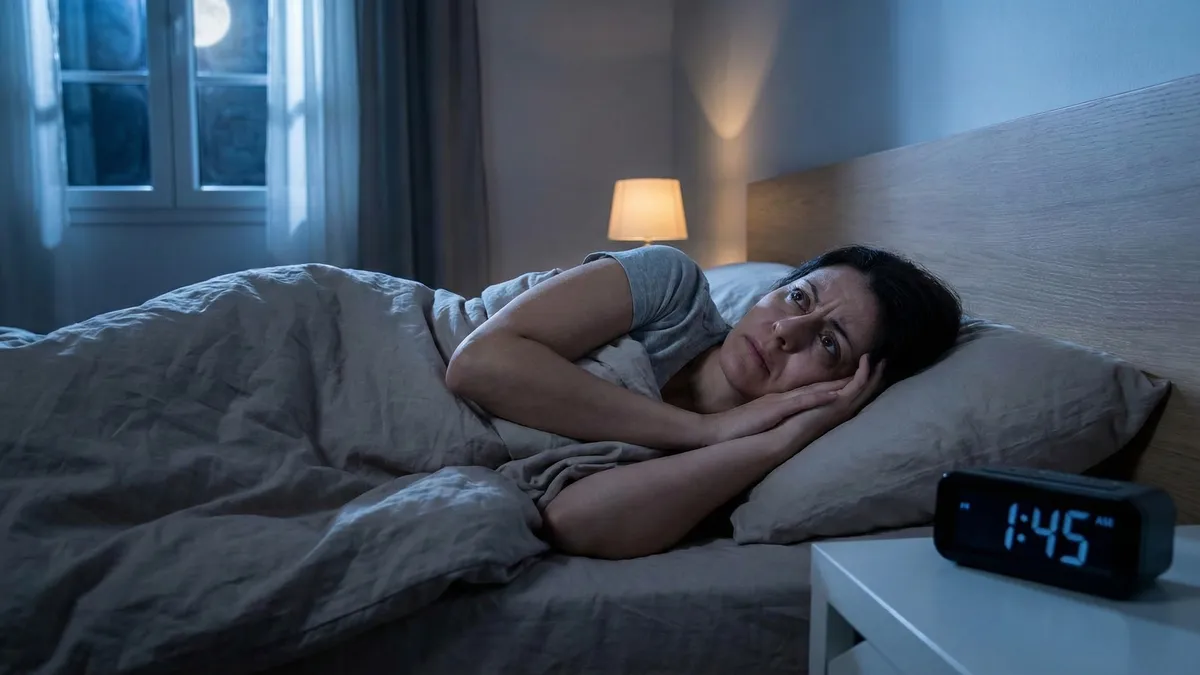
There was a stretch of about two years when I thought I had some kind of cyclical anxiety disorder. Every few weeks I'd have four or five nights of terrible sleep — waking at 3am, lying there hot and restless, unable to understand what was different about these particular nights. I'd adjusted my caffeine, my alcohol, my screen time, my exercise. Nothing seemed to explain the pattern.
It was my gynecologist, almost in passing, who connected the dots: "Have you looked at where these nights fall in your cycle?" I hadn't. When I did, the pattern was unmistakable. The bad nights clustered in the week before my period, almost without exception.
Sleep science has historically studied men, and when women were included, their hormonal cycles were often treated as a confounding variable to be controlled for rather than an interesting signal to study. That's starting to change, but slowly. Here's what we know so far.
01 How Hormones Influence Sleep Architecture
Three hormonal changes drive most of the sleep effects across the menstrual cycle: fluctuations in estrogen, progesterone, and — downstream of those — core body temperature.
Estrogen
High estrogen is associated with improved sleep quality, more REM sleep, and reduced sleep onset latency. Estrogen also modulates serotonin and other neurotransmitters involved in sleep regulation. When estrogen drops sharply (as it does before menstruation), sleep tends to deteriorate.
Progesterone
Progesterone is both sedating (through GABA receptor activity — similar to benzodiazepines) and thermogenic (it raises core body temperature). This creates the characteristic luteal phase paradox: you feel sleepier but sleep more lightly and wake up more[1].
Core Body Temperature
Sleep onset requires a drop in core temperature of about 1°C. Progesterone in the luteal phase keeps baseline temperature elevated, which delays this drop and interferes with deep sleep. This is the same mechanism that causes hot flashes during menopause.
Slow-Wave Sleep
Multiple studies have found reduced slow-wave (deep) sleep in the late luteal and premenstrual phases compared to the follicular phase. Since deep sleep is when the body does most of its physical restoration, this has real consequences for daytime energy and recovery[2].
02 Phase by Phase: What to Expect
A typical 28-day cycle has four phases with distinct hormonal profiles. Your cycle may be shorter or longer, and the exact timing shifts accordingly, but the pattern tends to be consistent relative to ovulation and menstruation.
Follicular Phase
Sleep during this phase
Days 1-3 are menstruation itself, often accompanied by pain, cramping, and disrupted sleep depending on severity. From days 4-5 onward, as estrogen begins rising, sleep tends to progressively improve. By the late follicular phase, many people experience their best sleep of the cycle: lower body temperature, more deep sleep, less fragmentation.
If you have a big exam, presentation, or anything requiring peak cognitive performance, days 8-13 are often the best time to schedule it.
Ovulation
Sleep during this phase
The LH (luteinizing hormone) surge that triggers ovulation is accompanied by a brief, sharp rise in core body temperature — typically 0.2-0.5°C. This can disrupt one to two nights of sleep around ovulation. Many people notice brief insomnia or lighter sleep around this time without connecting it to ovulation.
Luteal Phase
Sleep during this phase
This is the most complicated phase for sleep. Progesterone's sedating effect means you may feel drowsy during the day — classic "I need a nap and I don't know why" territory[1]. But nighttime sleep often becomes more fragmented, with more awakenings and less deep sleep, because the same hormone raises core temperature and disrupts sleep architecture.
Many people also notice vivid dreams during the mid-luteal phase. This may be related to changes in REM sleep distribution or progesterone's effects on neurotransmitter systems.
Premenstrual Phase
Sleep during this phase
This is usually the worst sleep of the cycle. Estrogen drops sharply, removing its protective sleep-promoting effects. Core temperature remains elevated from the luteal phase even as progesterone drops. Slow-wave sleep reaches its nadir. Add bloating, breast tenderness, mood shifts, and possible headaches, and it's often just genuinely hard to sleep well during these days.
This is also when the most sleep-related symptoms are commonly reported: insomnia, hypersomnia, unrefreshing sleep, increased dream recall. All of these can occur in the same person at different cycles.
"Women report more sleep complaints than men, are more likely to be prescribed sleep medication, and yet are vastly underrepresented in sleep research samples."
— Kathryn Lee, UCSF Department of Family Health Care Nursing
03 How Hormonal Contraception Changes Things
If you're using hormonal birth control, these patterns don't disappear — they shift, and the shift depends on which type of contraception you're using.
Combined oral contraceptives (estrogen + progestin)
COCs suppress the natural cycle and replace it with a synthetic one. Natural progesterone becomes synthetic progestins, which don't have the same sedating GABA receptor activity as natural progesterone. Some studies find that COC users have less slow-wave sleep variability across the cycle — the peak-to-trough difference is smaller. But this doesn't necessarily mean sleep is better overall; baseline sleep quality varies by formulation[3].
Progestin-only methods (mini-pill, hormonal IUDs, implants)
Progestin-only methods produce variable effects depending on whether ovulation is suppressed. Hormonal IUDs (like Mirena) release small amounts locally with low systemic absorption, so sleep effects are often minimal. The implant and higher-dose progestin-only pills may produce some of the temperature and fragmentation effects associated with natural luteal phase, depending on the individual's response.
The short version: if you're on hormonal contraception and still experiencing cyclical sleep disruption, it's worth tracking whether it correlates with the hormone-free interval (the "pill week" on combined OCs, for example). Many people find that their worst sleep happens during or around that interval when estrogen drops.
04 PMDD and Sleep: A Different Category
Premenstrual dysphoric disorder (PMDD) is a more severe form of premenstrual syndrome that meets criteria as a depressive disorder. Sleep disruption in PMDD is more extreme than what's described above — often including significant insomnia, hypersomnia, or both across different cycles, plus the mood, anxiety, and cognitive symptoms that define the condition[4].
PMDD affects an estimated 3-8% of menstruating people. It's distinct from PMS not just in severity but in the degree to which it impairs functioning. If your premenstrual sleep disruption is severe enough to interfere with work, relationships, or daily life, it warrants a conversation with a healthcare provider about PMDD specifically — because treatment options (SSRIs, certain contraceptives, sometimes GnRH analogues) are different from general sleep hygiene advice.
Tracking Is Diagnostic
One or two months of consistent cycle and sleep tracking is often enough to confirm whether sleep problems are cyclical. Apps that track both cycle and sleep data in one place make this relatively easy. If your sleep deteriorates in the same window every cycle, that's clinically meaningful information — bring it to your doctor.
05 Practical Adaptations for Each Phase
The goal here isn't to fight your cycle. It's to work with it — front-loading demanding tasks in good-sleep phases, and reducing demands during the predictably harder ones.
Lower Your Bedroom Temperature in the Luteal Phase
Because progesterone raises core temperature, sleeping in a slightly cooler room (64-66°F vs the usual 65-68°F) can partially compensate. Lightweight blankets and breathable sheets also help. The goal is supporting that ~1°C core temperature drop that signals sleep onset.
Don't Fight the Luteal Daytime Sleepiness
A 20-minute nap during the early luteal phase, when progesterone makes you drowsy in the afternoon, is not weakness. It's appropriate use of your physiology. Resisting it and then lying in bed wide awake at night because you're overtired is the worse outcome.
Manage Iron in the Menstrual Phase
Heavy menstrual bleeding can reduce iron stores enough to worsen restless leg syndrome symptoms, which in turn fragments sleep. If you experience uncomfortable leg sensations in the days during or after menstruation, low iron is worth investigating with a serum ferritin test.
Adjust Expectations for the Premenstrual Week
Some nights during the premenstrual phase are just going to be harder. Accepting this — rather than catastrophizing about it — reduces the anxiety that compounds bad sleep into worse sleep. You're not broken. Your cycle is doing what cycles do.
Time Magnesium Supplementation
Magnesium glycinate has evidence for improving sleep quality and reducing PMS symptoms (including sleep-related ones). Taking it in the luteal and premenstrual phases — when it's most needed — is more targeted than taking it year-round. Typical studied doses are 250-400mg at night.
Track and Use the Data
Two to three months of sleep tracking alongside cycle tracking reveals your personal pattern, which may differ from the average. Some people sleep worst during menstruation itself; others have their worst nights mid-luteal. Knowing your specific pattern lets you anticipate and adapt rather than be blindsided repeatedly.
This is not just "PMS"
The cyclical sleep changes described here are real, measurable in polysomnography, and driven by well-understood hormonal mechanisms. They're not mood or attitude. When you wake up at 3am in the premenstrual week feeling hot and frustrated and wide awake, your body is doing exactly what elevated core temperature and reduced slow-wave sleep would predict.
What changed for me when I understood this was that I stopped treating those nights as failures. I stopped lying awake wondering what I'd done wrong. I'd done nothing wrong. My cycle was in a particular phase, and my sleep reflects that. I started sleeping with a lighter blanket that week, keeping the room cooler, and not beating myself up about the quality. It didn't fix everything, but it changed the relationship with those nights completely.
Work with your cycle's sleep patterns, not against them. They're not a character flaw. They're a predictable biological rhythm that nobody explained to you — until now.
Sources & Further Reading
- "Menstrual factors in sleep." Sleep Medicine Reviews, 2(4), 213-229. (1998) PubMed →
- "Circadian rhythms, sleep, and the menstrual cycle." Sleep Medicine, 8(6), 613-622. (2007) PubMed →
- "Effects of hormonal contraceptives on sleep — a possible treatment for insomnia in premenopausal women." Sleep Science, 11(3), 222-227. (2018) PubMed →
- "Sleep, hormones, and circadian rhythms throughout the menstrual cycle in healthy women and women with premenstrual dysphoric disorder." International Journal of Endocrinology, 2010, 259345. (2010) PubMed →
- "Sleep during the perimenopause: a SWAN story." Obstetrics and Gynecology Clinics of North America, 38(3), 567-586. (2011) PubMed →