


Key Takeaways
- Side sleeping works best for most people—left side specifically for acid reflux and pregnancy
- Back sleeping wins for spinal alignment but makes snoring and sleep apnea worse
- Stomach sleeping is the worst position for almost everyone—your neck and spine pay for it
- For back pain, a pillow under the knees (back sleepers) or between them (side sleepers) makes a real difference
- Changing positions is hard—pillow barricades help, but you move 20+ times a night regardless
I went down the sleep position rabbit hole about two years ago. My back hurt every morning, I was snoring badly enough to annoy my partner, and every wellness blog had a different opinion on what I should do about it. So I spent weeks reading actual studies instead of influencer takes. Here's what I found: most of this stuff is overthought.
There's no universally "best" position. What works depends on what's wrong with you—your specific pain, breathing issues, or medical situation. But for a handful of common problems, the research does point to clear answers. The rest is noise.
01 The Three Sleep Positions
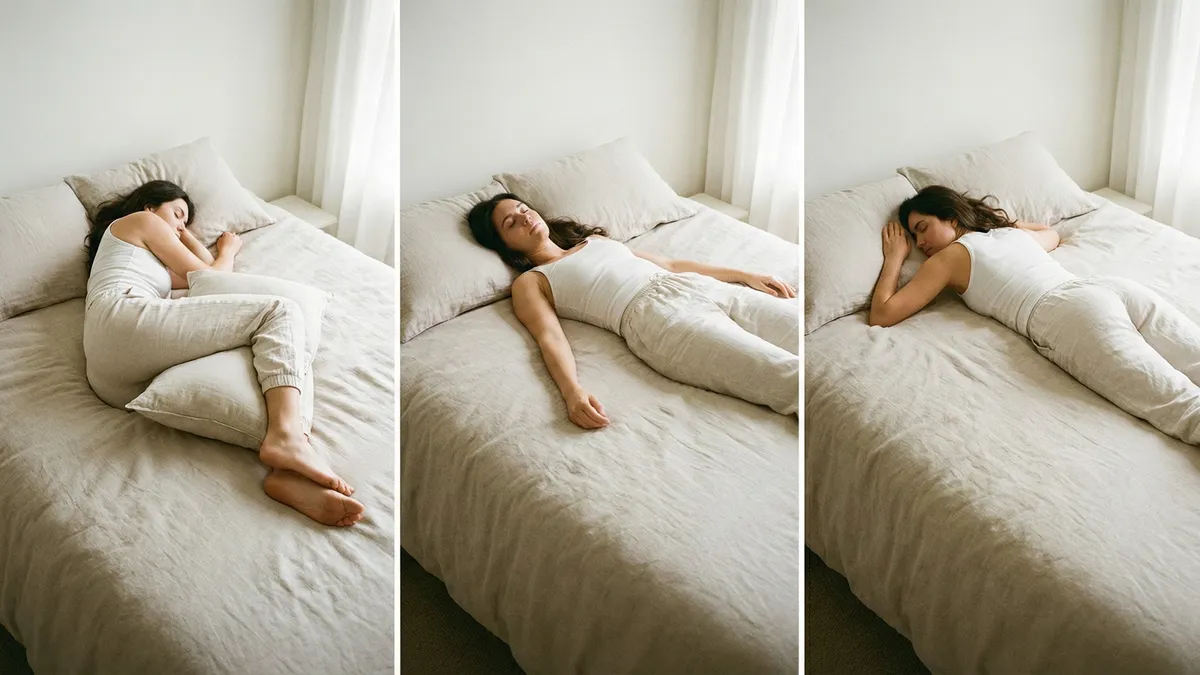
Before getting into specific conditions, here's the basic breakdown. About 60% of adults are side sleepers, 30% back, 10% stomach. None of these are inherently wrong—it depends what your body needs.
Side Sleeping
~60% of peoplePros
- Reduces snoring and apnea
- Aids digestion (left side)
- Good for pregnancy
- Promotes brain waste clearance
Cons
- Can cause shoulder pain
- May increase facial wrinkles
- Requires proper pillow height
Back Sleeping
~30% of peoplePros
- Best for spinal alignment
- Distributes weight evenly
- Minimizes facial pressure
- Good for most pain types
Cons
- Worsens snoring significantly
- Worst for sleep apnea
- Avoid late in pregnancy
Stomach Sleeping
~10% of peoplePros
- Can reduce snoring
- Some find it comfortable
Cons
- Strains neck (turned to breathe)
- Flattens spinal curve
- Pressure on joints
- Generally not recommended
02 Back Pain
This is the reason most people start Googling sleep positions in the first place. The goal is straightforward: keep your spine's natural curve intact while you sleep. Most positions don't do that on their own—you need to modify them.
Best Position for Back Pain
Back sleeping with a pillow under your knees
The pillow props up your knees enough to maintain your lumbar curve and takes pressure off the lower back. A rolled towel under the small of your back adds more support if you need it[1].
Good Alternative
Side sleeping with a pillow between your knees
The pillow stops your upper leg from dragging your spine out of line. You want a firm one that actually fills the gap between your knees—a flat decorative pillow won't cut it.
"The spine has natural curves that need support. When those curves are flattened or exaggerated during sleep, pain results."
— Dr. Michael Breus, Clinical Psychologist & Sleep Specialist
Specific Back Conditions
Lower Back Pain
Best: Back with knees elevated, or fetal position
Avoid stomach sleeping—it hyperextends the lumbar spine.
Sciatica
Best: Side with pillow between knees, affected side up
Takes pressure off the sciatic nerve root.
Herniated Disc
Best: Fetal position (side, curled up)
Opens the space between vertebrae, reducing nerve pressure[2].
Spinal Stenosis
Best: Side sleeping in mild flexion
Flexing forward opens the spinal canal and relieves pressure.
03 Snoring & Sleep Apnea
This is where sleep position makes the biggest measurable difference. Lie on your back and gravity pulls your tongue and soft palate backward, narrowing your airway. That's the whole mechanism. It's also why positional therapy is often the first thing doctors try before CPAP or surgery.
Best Position for Snoring/Apnea
Side sleeping (either side)
Gravity stops working against you. Your airway stays open because the soft tissue isn't collapsing backward. In positional apnea patients, switching to side sleeping can cut apnea episodes by half or more.
Worst Position
Back sleeping
Everything falls backward—tongue, soft palate, jaw. If you snore, just getting off your back will likely do more than any of those anti-snoring gadgets you've seen advertised.
Positional Therapy Devices
Can't stay on your side? There are a few approaches, ranging from low-tech to expensive:
- Tennis ball technique: Tape or sew a tennis ball to the back of your sleep shirt. Crude, cheap, and surprisingly effective—the discomfort makes you roll back over without fully waking up
- Positional pillows: Body pillows or wedge pillows that physically block you from ending up on your back
- Wearable vibration devices: These buzz gently when you roll supine. They work, but they cost $100+ and the tennis ball does the same job for free
04 Acid Reflux (GERD)
If you have GERD, this section matters more to you than anything else in this article. The research here is unusually clear-cut. Left side wins. It's not even close.
Why Left Side?
It's anatomy. Your esophageal junction—where food enters the stomach—sits on the right side. Left-side sleeping lets gravity pull stomach contents away from that junction. Roll to your right and acid pools right at the opening to your esophagus. Khoury et al. demonstrated this clearly in a 1999 study in the American Journal of Gastroenterology[4].
Stomach contents pool away from esophagus. Gravity helps keep acid down.
Stomach contents pool near esophageal sphincter. More reflux episodes.
Elevation Helps Too
Elevating the head of your bed by 6-8 inches also reduces reflux episodes. Important: this means raising the actual bed, not just stacking pillows (which bends your body at the waist and can make things worse). Options:
- Bed risers under the headboard legs (cheapest option, works well)
- A proper wedge pillow that elevates your whole torso
- An adjustable bed frame (expensive, but useful if you also have other issues)
05 Pregnancy
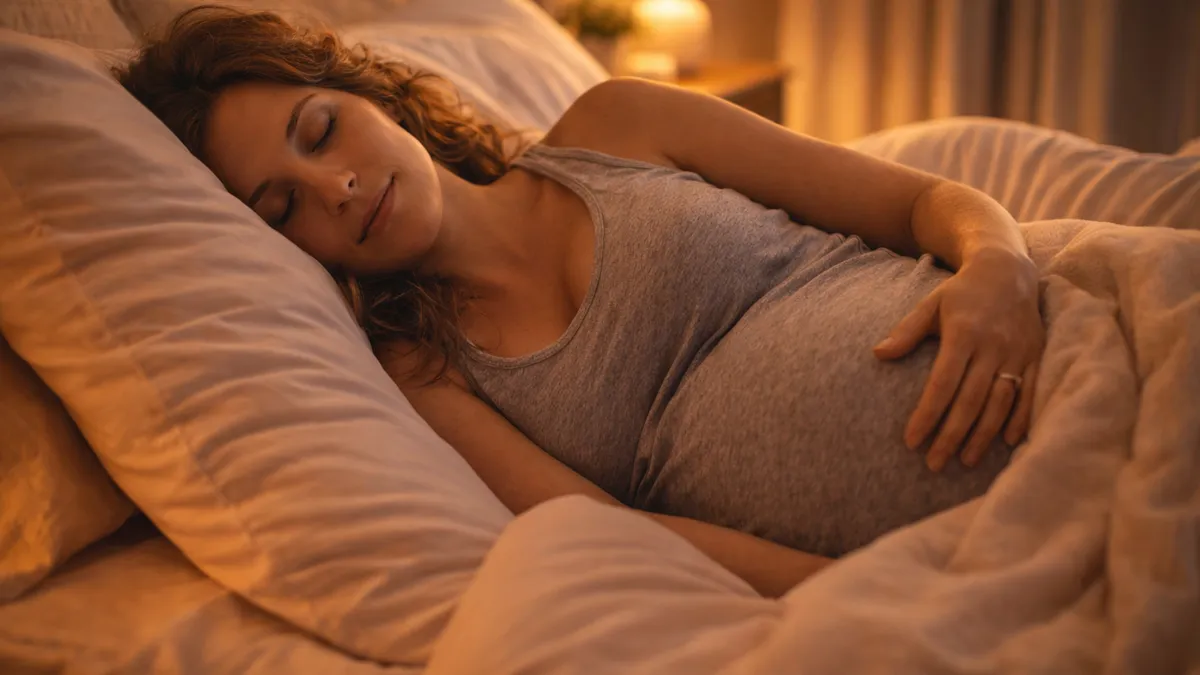
Position matters more as pregnancy progresses, and by the third trimester the medical consensus is pretty firm: sleep on your side. Left is preferred, but either side is acceptable.
Best Position for Pregnancy
Left side sleeping ("SOS" - Sleep On Side)
The inferior vena cava—the large vein that returns blood to your heart—runs along the right side of your spine. Left-side sleeping keeps the weight of the uterus off it, improving blood flow to the placenta. A 2019 meta-analysis by Heazell et al. in EClinicalMedicine confirmed the association between supine sleeping and increased stillbirth risk[5].
Position to Avoid
Back sleeping (after 20 weeks)
The uterus compresses the vena cava, reducing blood flow. Some studies link this to increased stillbirth risk. The absolute risk is still low, and your body usually wakes you up before anything bad happens—but why gamble when the fix is just rolling over?
Pregnancy Sleep Tips
- Pregnancy pillow: The C-shaped or U-shaped full-body ones actually work. They prop your belly up and make it harder to roll onto your back
- Pillow between knees: Takes pressure off your hips and lower back. Worth doing even if you aren't pregnant, honestly
- Woke up on your back? Don't spiral. Your body almost always wakes you before there's a real problem. Just roll back over and let it go
06 Other Conditions
Neck Pain
Best: Back or side with a pillow that actually fits your body
Your head should stay level with your spine. Too high, too low—both cause problems. Stomach sleeping forces a 90-degree neck rotation for hours. Don't do that.
Shoulder Pain
Best: Back, or side sleeping on the pain-free shoulder
Obvious, but worth saying: stop sleeping on the shoulder that hurts. If you're a side sleeper, hug a pillow so your top shoulder doesn't rotate forward and compress the joint.
Hip Pain
Best: Back with pillow under knees, or side with pillow between knees
If your mattress is too firm, a topper might help more than any position change. Side sleepers: stay off the painful hip.
Sinus Congestion
Best: Head elevated, or side sleeping
Lying flat on your back makes post-nasal drip worse. Elevate your head or sleep on your side with the clearer nostril facing down (counterintuitive, but it works—gravity drains the congested side).
Heart Conditions
Best: Right side (for some) or elevated
Left-side sleeping puts the heart closer to the chest wall, which can make you more aware of your heartbeat. Some cardiac patients find it uncomfortable. Talk to your cardiologist—this one's too individual for general advice.
07 Changing Your Sleep Position
I'll be honest: if you've slept on your stomach for 30 years, you're not going to become a side sleeper overnight. Your body reverts the moment you lose consciousness. But with enough stubbornness and some physical barriers, it's doable. Most people see results in a few weeks.
Fall Asleep in the Target Position
You'll roll during the night. That's fine. The point is to start there—your body spends the most time in whatever position you fall asleep in.
Build Pillow Barricades
Body pillow behind your back, pillow between your knees. Make it physically annoying to roll where you don't want to go.
Fix the Comfort Problem First
If the new position hurts, you won't stick with it. Get the right pillow height and mattress firmness sorted before you commit.
Give It 2-4 Weeks
You'll probably sleep worse at first. That's normal. Your body needs time to stop fighting the change.
"The average adult changes position 10 to 30 times per night. Positional therapy is about biasing your time toward a target position, not eliminating movement."
— Joosten et al., Sleep Medicine Reviews, 2014
Stop Overthinking This
You move 20+ times per night. You are not going to hold one position for eight hours no matter how hard you try. The goal isn't perfection—it's nudging the odds in the right direction.
If you have a specific problem—snoring, GERD, back pain, pregnancy—the research gives you a clear starting position. Side sleeping is the safest general-purpose answer. Stomach sleeping is worth quitting if you can manage it; the neck strain alone isn't worth the habit. And if you snore or deal with reflux, getting off your back is probably more effective than whatever product you're considering buying.
Beyond that? A pillow between or under your knees, maybe a body pillow to keep you from rolling. That's really it. Don't lose sleep over how you sleep.
Sources & Further Reading
- "Your Pillow May Not Guarantee a Good Night's Sleep or Symptom-Free Waking." Physiotherapy Canada, 63(2), 183-190. (2011) PubMed →
- "Effects of sleeping position on back pain in physically active seniors." Work, 53(4), 851-858. (2016) PubMed →
- "Supine position related obstructive sleep apnea in adults: Pathogenesis and treatment." Sleep Medicine Reviews, 18(1), 7-17. (2014) PubMed →
- "Influence of spontaneous sleep positions on nighttime recumbent reflux." American Journal of Gastroenterology, 94(8), 2069-2073. (1999) PubMed →
- "Association between maternal sleep practices and late stillbirth." EClinicalMedicine, 10, 28-34. (2019) PubMed →
Recommended Resources
- The Sleep Solution by W. Chris Winter, MD
- American Academy of Sleep Medicine: Position Papers
- Sleep Foundation: Best Sleeping Positions