




Key Takeaways
- Sleepwalking is a disorder of arousal, not a dream. It happens during deep (N3) sleep, not REM
- The brain is in a dissociated state — motor and some sensory regions awake, consciousness and memory regions still asleep
- Genetics plays a major role: if both parents sleepwalk, children have a ~60% chance of sleepwalking
- Common triggers include sleep deprivation, alcohol, fever, stress, and certain medications
- Related disorders include sleep-related eating disorder and sexsomnia — both legally and medically recognized variants
- Never shake a sleepwalker awake — guide them gently back to bed; abrupt waking causes disorientation and distress
- Confusional arousals in children are normal and almost always outgrown; adult-onset sleepwalking warrants evaluation
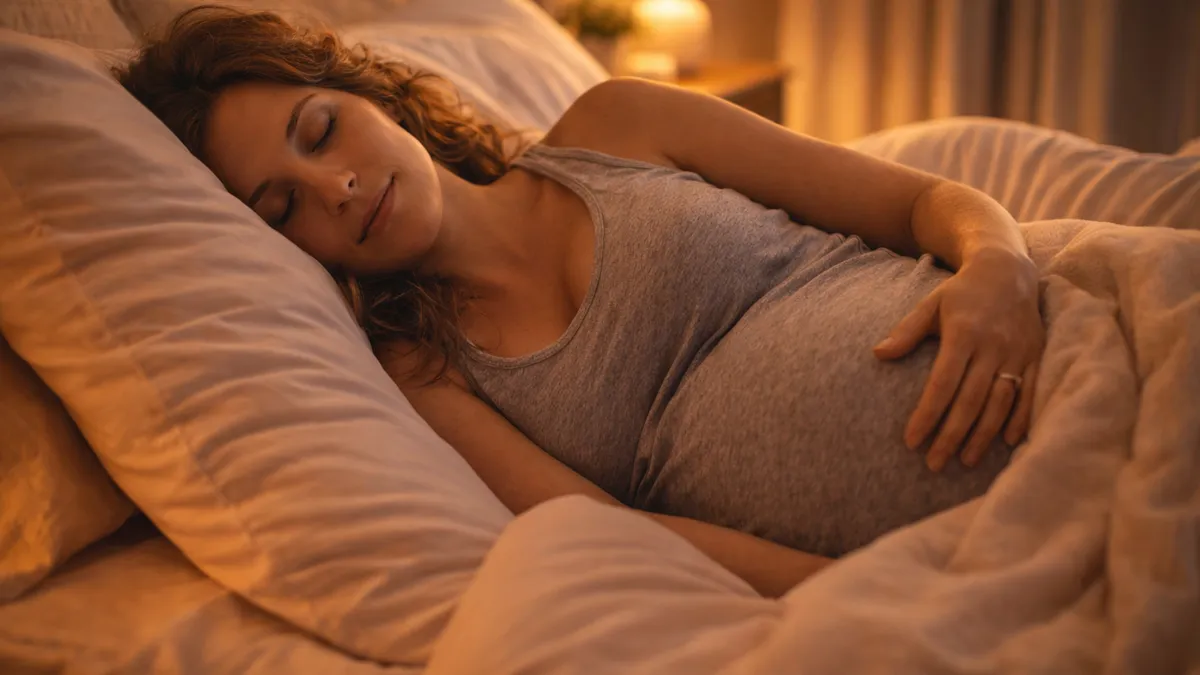
My flatmate in grad school was a sleepwalker. He'd get up at 2am, walk to the kitchen, open the fridge, stare into it for a few seconds with completely blank eyes, then wander back to bed. If you spoke to him, he'd sometimes answer in monosyllables — but he was never actually there. He remembered nothing in the morning and was always faintly embarrassed when told about it.
Most people assume sleepwalking is a dream playing out — that somewhere in the person's sleeping mind they're enacting a scene, and the body just happens to be going along with it. That's a reasonable intuition. It's also completely wrong. What's actually happening is stranger and more mechanistically interesting than that.
01 Why Deep Sleep, Not Dreaming
Sleepwalking belongs to a category called non-REM parasomnias — specifically disorders of arousal from N3 sleep (slow-wave or deep sleep). It typically occurs in the first third of the night, when slow-wave sleep is most concentrated. This is the exact opposite of the REM-heavy second half of the night, when vivid dreams occur[1].
This distinction matters for understanding what's going on. During REM sleep, your body is actively paralyzed (atonia) to prevent you from acting out dreams — which is why REM sleep behavior disorder, where that paralysis breaks down, is such a distinct and concerning condition. Sleepwalking isn't about a failure of that system. It's about something different: incomplete arousal from deep sleep.
When Sleepwalking Happens in the Sleep Cycle
Sleep cycles repeat across the night. Deep sleep dominates the first half; REM dominates the second half.
02 The Dissociated Brain: Partly Awake, Partly Asleep
What neuroimaging and EEG studies have shown is genuinely fascinating. During a sleepwalking episode, the brain is not uniformly asleep. It's in a dissociated state — some regions showing waking-level activity, others still in deep sleep[2].
Regions Active (Awake-like)
- Motor cortex — enabling movement
- Sensory processing areas — basic environmental navigation
- Brainstem arousal systems — partial activation
- Limbic system — can drive emotional or habitual behaviors
Regions Inactive (Still Asleep)
- Prefrontal cortex — executive function, judgment, decision-making
- Hippocampus — memory formation (hence no recall)
- Language areas — limited to simple responses
- Higher sensory processing — why they seem to "not see" you
This is why sleepwalkers can navigate a familiar environment without walking into walls — basic motor and sensory processing is online — but can't hold a conversation, remember the episode, or respond to novel or complex situations. Ask my flatmate something simple and he'd sometimes grunt a response. Ask him what he was doing and he'd just stare blankly. Different brain regions, different answers.
"Sleepwalking is the brain waking up in parts. The parts that move are running. The parts that think, remember, and decide are still asleep."
— Antonio Zadra, sleep researcher, Université de Montréal
This partial arousal model also explains the range of behaviors seen in sleepwalking — from the simple (sitting up in bed, wandering to another room) to the complex (preparing food, leaving the house, occasionally driving). More motor activation and more limbic engagement produces more complex behaviors, even without conscious awareness.
03 Who Sleepwalks and Why
Sleepwalking is far more common than most people realize. About 1-7% of adults report sleepwalking, and up to 17% of children experience it — in most children it resolves naturally by adolescence[3].
The Genetic Connection
Sleepwalking runs strongly in families. Having one parent who sleepwalks roughly doubles your risk. Having both parents who sleepwalk raises your likelihood to approximately 60-65%. Twin studies show higher concordance in identical versus fraternal twins. The specific genes haven't been fully mapped, but a mutation in the adenosine deaminase gene (ADRA1) has been identified in some families as a contributing factor.
Beyond genetics, several factors reliably trigger or worsen sleepwalking:
Sleep Deprivation
The most reliable trigger. Sleep debt increases slow-wave sleep rebound intensity — the body's drive to get deep sleep is stronger, and the transition in and out of it becomes more unstable. One bad week of sleep can trigger sleepwalking in someone genetically predisposed.
Alcohol
Alcohol increases slow-wave sleep in the first half of the night and then fragments it in the second half — creating exactly the kind of arousal instability that causes sleepwalking. This is why sleepwalking episodes are more common and sometimes more complex after drinking.
Fever and Illness
Febrile illness disrupts the transitions between sleep stages. Many parents of children who sleepwalk report that episodes are concentrated around illness. The mechanism appears to involve both the fever's direct effects on brain temperature and the disrupted sleep architecture during illness.
Stress
Psychological stress doesn't cause sleepwalking directly, but it disrupts sleep architecture in ways that trigger it in predisposed individuals. Life stressors, exams, significant events — these are commonly reported antecedents to sleepwalking episodes in adults.
Medications
Several medications have sleepwalking as a documented side effect: zolpidem (Ambien) is probably the most famous, but also some antidepressants (SSRIs, lithium), antipsychotics, and beta-blockers. If sleepwalking started after a new medication, that's worth discussing with your prescriber.
Sleep Apnea
Obstructive sleep apnea causes repeated arousal from deep sleep, creating the unstable N3 transitions that trigger sleepwalking. Treating the apnea often reduces or eliminates sleepwalking in patients where both conditions are present.
04 The Stranger Variants: Eating, Sex, and Complex Behavior
Sleepwalking exists on a spectrum with other disorders of arousal that are worth knowing about — both because they're more common than discussed, and because they have significant implications that pure sleepwalking doesn't.
Sleep-Related Eating Disorder (SRED)
Recurrent episodes of eating during partial arousals from sleep, typically with no or incomplete memory of the episode. People with SRED may consume unusual food combinations, inedible substances, or large quantities of food — and discover evidence in the morning without any recollection. It's not hunger driving the behavior; the limbic system's routine-driven activity is operating without conscious oversight. SRED is more common in women and in people with a history of eating disorders or who take certain sleep medications[4].
Sexsomnia (Sleep-Related Abnormal Sexual Behavior)
Sexual behavior occurring during partial arousal from sleep, without consciousness or memory. This is legally and forensically significant because consent is impossible during a genuine episode — the person is not awake. It's been used in criminal cases in both directions (as a defense and as evidence of a disorder requiring treatment). Sexsomnia follows the same mechanism as other disorders of arousal: limbic system activation without prefrontal control.
Confusional Arousals in Children
Children between 2 and 10 regularly experience confusional arousals — brief periods of apparent waking where they seem distressed, confused, and unresponsive to parents. These are extremely common and are part of normal development as the nervous system matures. They almost always resolve naturally and require no treatment beyond safety measures. Parents often find them more distressing than the child does — the child typically has no memory and no lasting effects.
05 Keeping Sleepwalkers Safe and When to See a Doctor
The most important practical information about sleepwalking is what to do when it happens in your household — and when to seek help.
Don't Forcefully Wake Them
Abruptly waking a sleepwalker causes intense confusion, disorientation, and sometimes distress or aggression — not because they're dangerous, but because waking from deep sleep is disorienting under any circumstances, and their prefrontal cortex is not ready. Instead: speak calmly, guide gently back toward bed, and let the episode end naturally.
Secure the Environment
Door alarms (a simple bell is enough), stair gates, locking external doors at night, and removing hazards from common walking paths are the main practical safety measures. The goal is preventing injury, not stopping the episode. Sharp objects in the kitchen, weapons in the home, and second-floor windows are specific risks to address.
Eliminate Triggers First
Before any medical intervention, addressing the obvious triggers is often sufficient: improving sleep consistency, reducing alcohol, treating any underlying sleep apnea, reviewing recent medication changes. Many people find that addressing sleep deprivation alone dramatically reduces episode frequency.
Scheduled Waking for Frequent Episodes
If sleepwalking is frequent and predictable, a technique called scheduled waking — briefly waking the person 15-30 minutes before their usual episode time — can interrupt the arousal pattern. This is more useful for children than adults and should be done with guidance from a sleep specialist.
When to See a Doctor
Frequent episodes (more than once or twice a week), episodes involving complex behavior or leaving the house, new-onset sleepwalking in adults, episodes that cause or risk injury, and sleepwalking associated with daytime sleepiness or unrefreshing sleep all warrant medical evaluation. A sleep study (polysomnography) can confirm the disorder and rule out sleep apnea as a trigger.
Medication as a Last Resort
For severe, refractory cases, clonazepam (a benzodiazepine) or melatonin have been used, though the evidence base is modest. Clonazepam reduces the amount of slow-wave sleep and thus the frequency of arousal-based events. It's appropriate for situations where safety is genuinely at risk and behavioral measures haven't been sufficient.
The weirdness is the whole point
What I find genuinely interesting about sleepwalking — and what I wish more people understood — is what it reveals about consciousness. We tend to think of wakefulness and sleep as binary states: you're either fully awake or fully asleep. Sleepwalking shows that the brain doesn't actually work that way. Different regions can be in different states simultaneously. You can be conscious enough to walk but asleep enough to not remember it. You can respond to language without language comprehension.
The person wandering your hallway at 2am isn't dreaming. They're not possessed. They're experiencing a partial, dissociated arousal from deep sleep — their motor systems running on habit and limbic drive, their executive brain still offline. It's a window into the distributed, modular nature of consciousness that philosophers have debated for centuries and that neuroscientists are still mapping.
If you or someone you live with sleepwalks, the practical priorities are safety first, trigger reduction second, and medical evaluation if it's frequent or risky. The philosophical fascination can be an optional extra.
Sources & Further Reading
- "Somnambulism." In: Kryger, M., Roth, T., & Dement, W. C. (Eds.), Principles and Practice of Sleep Medicine, 6th Ed. Elsevier. (2017) Publisher →
- "Evidence of dissociated arousal states during NREM parasomnia from an intracerebral neurophysiological study." Sleep, 32(3), 409-412. (2009) PubMed →
- "Prevalence and comorbidity of nocturnal wandering in the US adult general population." Neurology, 78(20), 1583-1589. (2012) PubMed →
- "Parasomnias: an updated review." Neurotherapeutics, 9(4), 753-775. (2012) PubMed →
- "Novel genetic findings in an extended family pedigree with sleepwalking." Neurology, 76(1), 49-52. (2011) PubMed →