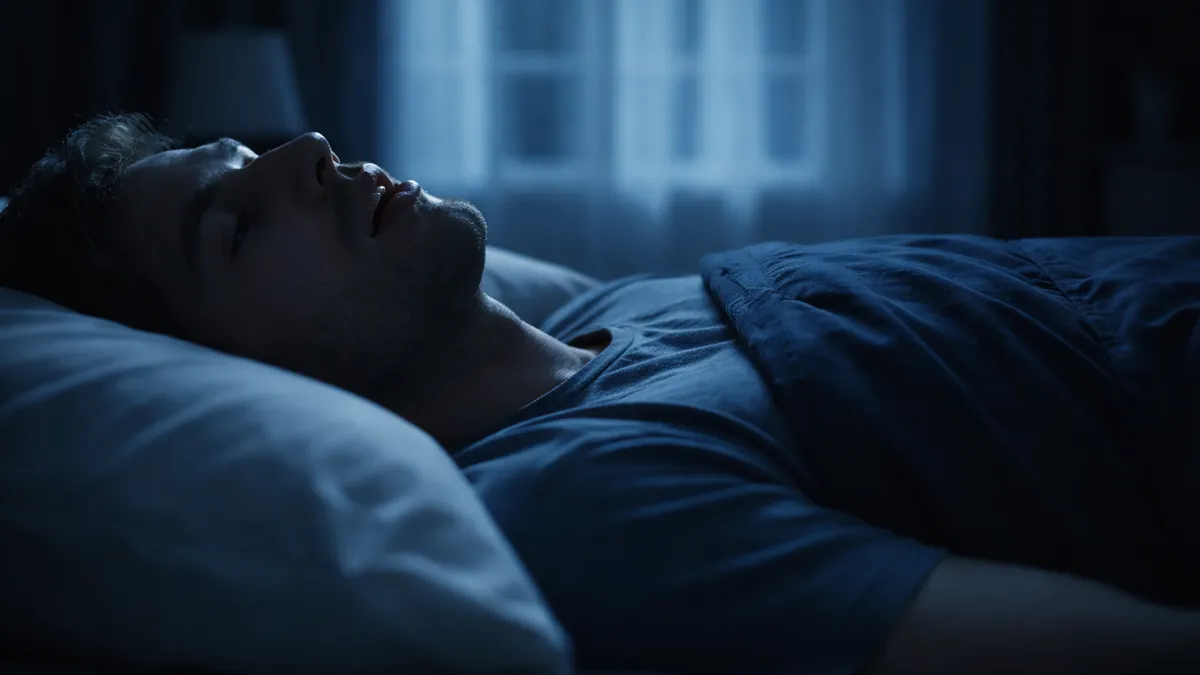




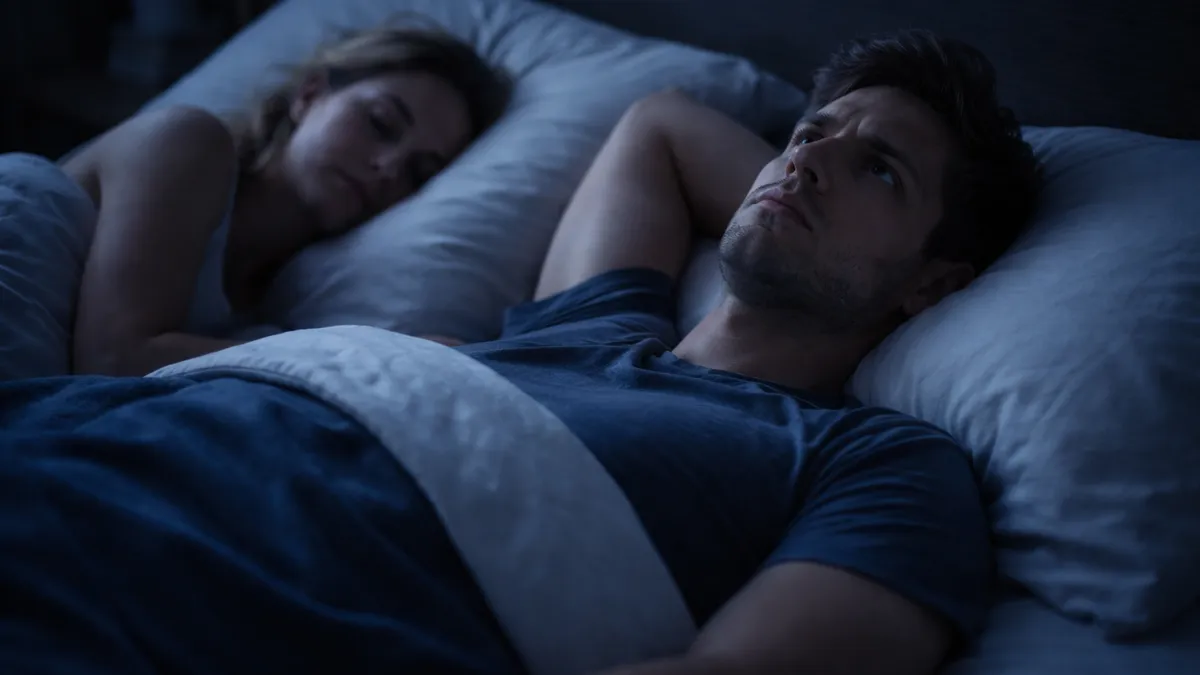
Key Takeaways
- Sharing a bed with a partner can measurably reduce sleep quality — but it doesn't have to
- "Sleep divorce" (sleeping in separate beds or rooms) is more common and healthier than you think
- Chronotype mismatches (night owl + early bird) are one of the biggest relationship sleep challenges
- Snoring is a medical issue worth treating, not just an annoyance to white-noise your way through
- The Scandinavian method — two separate duvets — solves blanket theft permanently
- Temperature compromise is possible; dual-zone mattress pads are genuinely worth it
Nobody tells you, when you move in with someone you love, that you are also agreeing to share a mattress with their elbows, their 3am bathroom trips, their inexplicable need to sleep at a 45-degree diagonal, and their ability to steal every single blanket while somehow remaining entirely asleep.
Romantic comedies skip this part. So does every wedding speech. But co-sleeping with a partner is genuinely one of the more complicated sleep challenges a person faces — not because it's impossible to make work, but because most couples just quietly suffer instead of actually solving it.
I spent my graduate years studying circadian disruption. Which means I am professionally aware of exactly how bad shared-bed sleep problems can get, and I'm still surprised by how many otherwise rational adults just... accept terrible sleep as the price of partnership. It doesn't have to be. Let's talk about what actually helps.
01 The "Sleep Divorce" — It's Not What It Sounds Like
The term sounds dramatic. It's not. "Sleep divorce" just means sleeping in separate beds — whether that's a different mattress in the same room, a guest room some nights, or a permanent separate-bedroom arrangement. And it's far more common than people admit.
A 2023 American Academy of Sleep Medicine survey found that about one in three Americans sleep separately from their partner at least occasionally, and many do so regularly[1]. A significant chunk of those people report sleeping better as a result.
Arguments For Sleeping Apart
- Better sleep quality for both partners
- Less resentment from disrupted nights
- Each person controls their environment
- Easier to maintain different schedules
- No snoring or movement transfer
Arguments Against Sleeping Apart
- Loss of intimacy and connection
- Partner may feel rejected
- Social stigma (still real, still dumb)
- Requires extra space or room
- Less physical closeness overnight
The research leans toward sleep quality mattering more than most people expect — chronically poor sleep degrades mood, patience, and relationship satisfaction in ways that arguably do more damage to a partnership than sleeping in separate rooms ever could[2]. Tired people are irritable people. Irritable people are difficult to be in a relationship with.
The key is having an honest conversation about it rather than one partner silently fuming at 2am while the other snores peacefully into the void. Sleeping apart isn't a failure. It's a logistics solution.
"The best thing you can do for your relationship might be to sleep in a different room."
— Essentially every sleep researcher who studies couples
02 Chronotype Mismatch: When One of You Is a Morning Person
Chronotype is your biological sleep preference — the time your body naturally wants to sleep and wake. It's not a personality trait or a discipline problem. It's genetics and circadian biology. Some people are genuinely wired to feel alert at 11pm. Others are genuinely wired to be useless before 9am. And these two types end up in relationships with each other constantly.
Morning Type ("Lark")
Naturally wakes early, peaks in productivity before noon, gets sleepy by 9-10pm. Finds late nights exhausting rather than energizing.
Evening Type ("Owl")
Naturally alerts in evening, peaks after lunch, genuinely cannot fall asleep before midnight. Mornings feel like a physical assault.
Intermediate Type
The majority of people fall somewhere in the middle — mildly preferring morning or evening, but adaptable to reasonably timed schedules.
When a strong lark partners with a strong owl, the practical conflicts compound quickly: the owl's late-night light and activity disrupts the lark's sleep onset; the lark's early alarm and movement disrupts the owl's critical late-morning sleep stage. Both end up sleep-deprived. Both blame each other. Neither is actually at fault.
Blackout Curtains + Separate Alarms
The lark's alarm shouldn't be the owl's problem. Use vibrating wristbands or phone-under-pillow alarms. The owl gets to keep sleeping; the lark gets up without a confrontation.
Agree on a "Quiet Hours" Window
If the owl needs to be awake at midnight and the lark needs to sleep at 10pm, negotiate which activities are quiet (reading, headphones) versus noisy (TV, phone calls).
Light Management
Late-night bright light from screens or overhead lighting suppresses the lark's melatonin and delays sleep onset. Warm-toned, dim lighting in shared spaces after 9pm helps.
Don't Try to Fix Each Other
Chronotype isn't laziness. You cannot "train" your partner out of being a night owl any more than you can train them out of their height. Work around it, not against it.
03 Snoring: The Relationship Destroyer That Nobody Talks About
Snoring is funny in movies. In real life, it's one of the most cited reasons couples start sleeping separately — and it's also one of the most medically significant sleep problems that people routinely ignore for years.
About 45% of adults snore occasionally, and roughly 25% are habitual snorers[3]. Loud, frequent snoring can be a symptom of obstructive sleep apnea (OSA), a condition where breathing repeatedly stops during sleep. If your partner snores loudly, stops breathing periodically, and wakes gasping — that's not just annoying. That's a health issue requiring medical attention.
Mild Snoring
Occasional, quiet-ish, usually positional
Try: side-sleeping, nasal strips, elevating the head of the bed
Moderate Snoring
Regular, louder, wakes the partner
Try: mandibular advancement device (over-the-counter), weight management, alcohol reduction
Loud + Gasping
Consistent, disruptive, includes pauses or gasps
See a doctor: possible sleep apnea. A CPAP machine can be genuinely life-changing.
The other partner isn't powerless either. White noise machines genuinely help — not by drowning out snoring, but by masking the variable sound (it's the unpredictability that keeps light sleepers awake, not the volume). A good white noise machine running at 65-70dB is more effective than earplugs for most people.
What Actually Reduces Snoring
• Sleeping on your side — back sleeping causes tongue and soft tissue to collapse into airway
• Elevating the head 4 inches reduces airway obstruction
• Avoiding alcohol within 3 hours of bed — it relaxes throat muscles dramatically
• Nasal strips — cheap, surprisingly effective for nose-based snoring
• Losing weight — excess tissue around the neck is a major factor
• CPAP therapy — for clinically diagnosed sleep apnea, nothing else comes close
04 Temperature Fights and the Blanket Problem
Sleep temperature is deeply personal and largely non-negotiable — your thermoregulation preferences are tied to your metabolic rate, body composition, and circadian biology. The ideal sleep temperature for most people is between 60–67°F (15–19°C), but "most people" covers a pretty wide range, and the gap between two people at the edges of that range feels like sleeping with a furnace versus sleeping in a meat locker.
The Two-Duvet Solution (The Scandinavian Method)
Scandinavian couples have been doing this for generations and the rest of the world is slowly catching on: two separate duvets, one per person. No shared top sheet. No blanket tug-of-war. No compromise on warmth level. You each get a cover rated to your own temperature preference and you sleep like separate, happy islands in the same bed.
It sounds weird until you try it, at which point you wonder why you spent years freezing or sweating for no reason. The only real adjustment is aesthetics — two duvets on a bed looks a bit different from the hotel-style made look, but after your first full night of uninterrupted temperature-correct sleep, you will not care about the aesthetics.
The Scandinavian Method: How to Do It
- Each person gets their own duvet — sized for one person (twin/single duvet on a queen/king bed)
- Choose your own tog/warmth rating — one person can have a 13.5 tog winter duvet while the other uses a 4.5 tog summer one
- Use a fitted sheet underneath as a shared base layer
- No top sheet required — you can if you want, but the duvets replace it
- Duvet covers keep it looking deliberate rather than chaotic
Mattress Temperature: Dual-Zone Solutions
If temperature is a major source of conflict, dual-zone mattress cooling/heating pads (like Eight Sleep or ChiliSleep products) are genuinely effective — though expensive. They run water through a pad beneath each person's side of the mattress, allowing each partner to set their own temperature from about 55°F to 115°F. Studies on temperature-regulated sleep show measurable improvements in sleep quality, particularly deep sleep stages.
The cost is high (typically $500–$2000 depending on the system), but for couples where temperature is a chronic source of argument or one partner runs significantly hotter, it can be worth the math.
Motion Transfer: The Underrated Problem
A light sleeper next to a restless partner is dealing with physical disturbance as well as noise. Memory foam mattresses dramatically reduce motion transfer compared to innerspring. If one partner moves a lot during sleep, the mattress material matters more than almost anything else. Test this before buying — the "drop a glass of wine on one side" demo exists for a reason.
05 Making Shared Sleep Work (Or Deciding It Doesn't Have To)
There's a real case for sharing a bed. Physical closeness while sleeping is associated with lower cortisol levels, increased oxytocin, and better emotional security for many people[2]. The problem isn't that sharing a bed is inherently bad — it's that we tend to treat every single sleep disruption as something to just silently endure.
The couples who handle co-sleeping best tend to share a few traits: they actually talk about it, they treat sleep problems as shared problems to solve rather than individual failings, and they're willing to try arrangements that might look unconventional from the outside.
Have the Actual Conversation
"I love you and I haven't slept properly in six months because of the snoring" is a solvable problem. "I'm exhausted and resentful but haven't said anything" is a relationship problem. Say the thing.
Trial a Sleep Divorce
Try separate sleeping for two weeks and track how you both feel. No judgment, just data. Many couples find they sleep better and actually enjoy reuniting in bed more intentionally.
Align Bedtimes Where You Can
Even if chronotypes differ, going to bed together occasionally — even if one person gets up again — maintains the connective ritual without sacrificing one person's sleep entirely.
Invest in the Environment
Blackout curtains, white noise, separate duvets, a good mattress — these are the unglamorous solutions that actually work. Cheaper than therapy, cheaper than a hotel, cheaper than the relationship problems that chronic sleep deprivation causes.
The bottom line on sleeping with someone you love
There's no rule that says love and sleep quality have to be in conflict. Most couples who struggle with co-sleeping are struggling with specific, solvable problems — snoring, temperature, chronotype mismatch, motion transfer — that have actual solutions. They just require some willingness to name the problem and try something different.
If separate sleeping is the answer, that's fine. Seriously. Your relationship does not require you to be bad at sleeping in the same room. The cultural expectation that couples must share a bed regardless of consequences to both partners' health is not based in biology or relationship science — it's based in real estate assumptions and what we've seen in movies.
Sleep well. Let your partner sleep well. Everything else will be easier.
Sources & Further Reading
- "Sleep divorce may actually help couples rest better." AASM Sleep Prioritization Survey. (2023) AASM →
- "Bed-sharing in couples is associated with increased and stabilized REM sleep and sleep-stage synchronization." Frontiers in Psychiatry, 11, 583065. (2020) Frontiers →
- "Snoring and upper airway resistance." Principles and Practice of Sleep Medicine, 5th ed., Elsevier. (2011) Elsevier →