


Key Takeaways
- Your circadian clock is regulated by the suprachiasmatic nucleus (SCN), which can only shift by about 15–20 minutes per day — meaning one forced hour takes nearly a week to absorb
- Spring forward is biologically worse than fall back — you're losing sleep on top of misaligning your clock
- Heart attack risk spikes 24% on the Monday after spring forward; traffic accidents and workplace injuries follow the same pattern
- Morning light exposure is the single most effective tool for resetting your circadian clock quickly
- The permanent DST debate is real — the EU voted to abolish clock changes, and Arizona has never observed DST at all
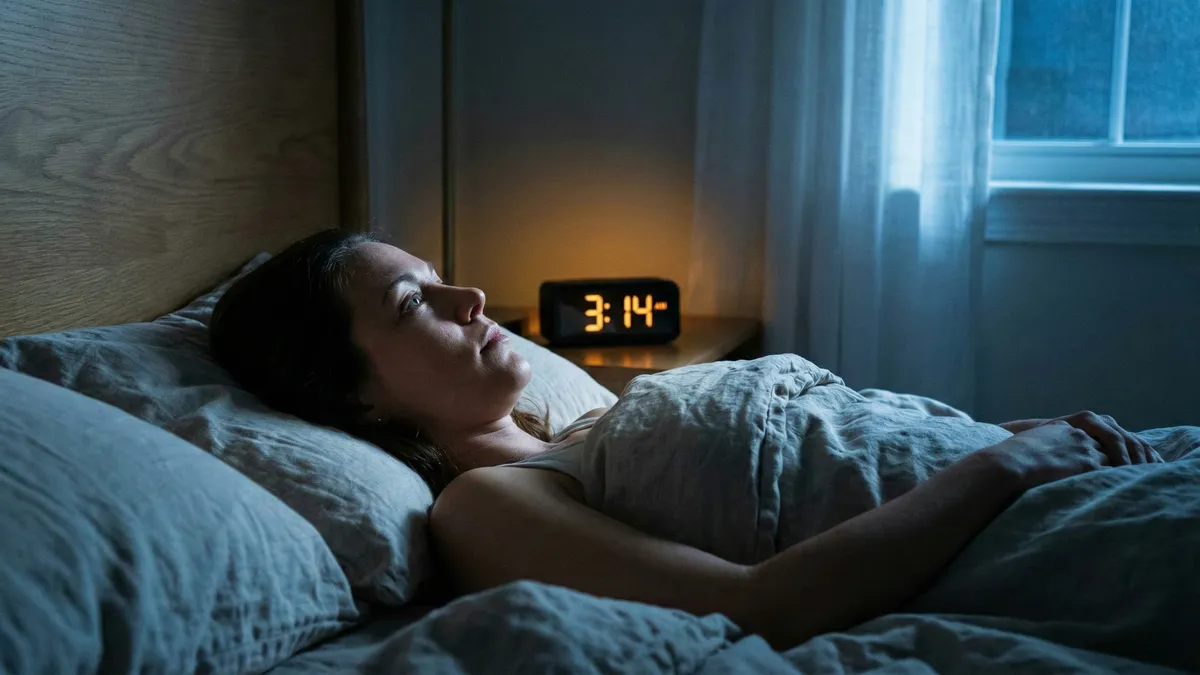
Every year, twice a year, we have the same collective conversation. "It's just one hour." "You'll adjust." "Stop complaining." And every year, large numbers of people spend the following week feeling mildly terrible and wondering why a single hour of sleep is apparently load-bearing for their entire existence.
Here's the thing: the people brushing it off aren't wrong that it's one hour. They're just wrong about what that one hour actually represents. This isn't about sleep debt. It's about your biology getting abruptly told that the sun now rises at a completely different time, and having no good mechanism to deal with that quickly.
I spent two years studying exactly this kind of disruption — specifically in shift workers — and the mechanisms are the same. The clock in your brain doesn't care about your calendar. It cares about light. And you can't negotiate with it.
01 Why One Hour Feels Like Three
Your sleep-wake cycle is controlled by a tiny cluster of neurons in your hypothalamus called the suprachiasmatic nucleus, or SCN. About 20,000 neurons, right above where your optic nerves cross. This structure receives direct light input from your retinas and uses that information to coordinate essentially every time-sensitive biological process in your body — hormone release, body temperature, digestion, immune function, the works[1].
The SCN is very good at what it does. It's also stubborn. It can shift by roughly 15 to 20 minutes per day, which is about the rate at which the sunrise naturally changes across seasons. That's what it's designed to handle. One hour in a single night? That's not something it has a mechanism for. It just keeps producing the same hormonal signals at the same internal time — which is now out of sync with your alarm clock by a full hour.
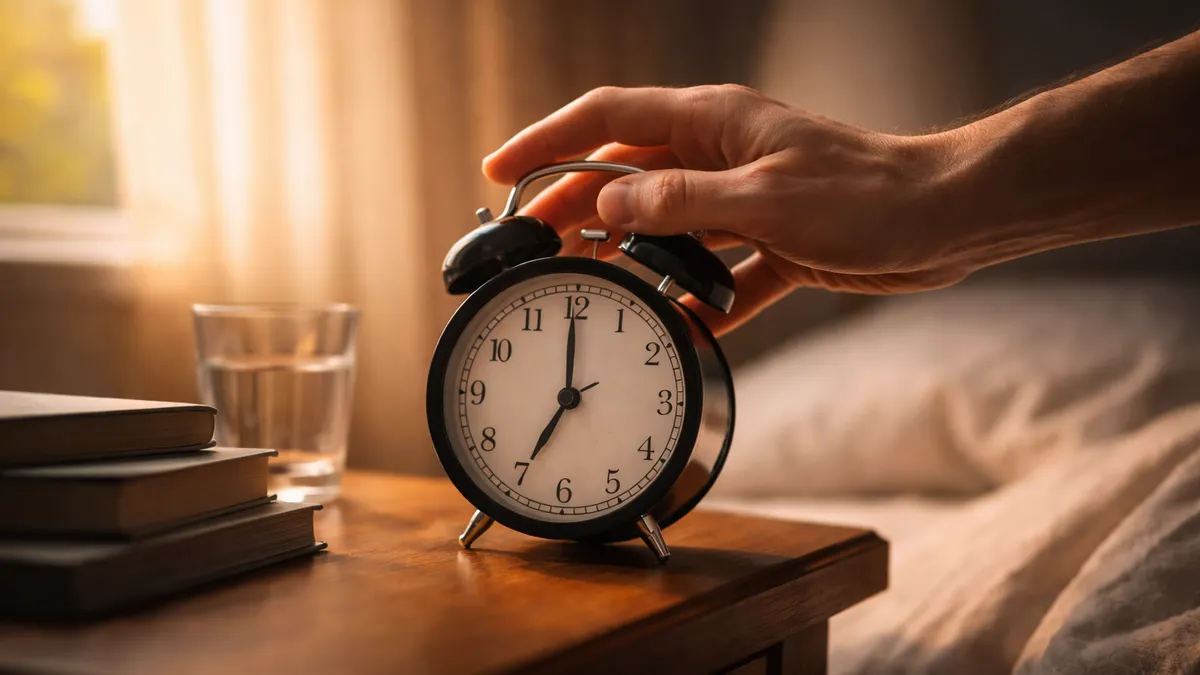
Cortisol — your wake-up hormone — peaks about 30 to 45 minutes before your usual wake time to prepare your body to get up. After spring forward, it still peaks at the old internal time, which is now an hour earlier by the clock. So you're being asked to function at what your body considers 5am when your alarm says 6am. Then you do that five days in a row before the weekend, by which point you're running a genuine sleep deficit on top of the circadian misalignment.
"The SCN doesn't read calendars. It reads light. You can't vote to change what time sunrise is in your hypothalamus."
— Jamie Okonkwo
Spring forward is also worse than fall back for an obvious arithmetic reason: you're losing an hour of sleep while simultaneously misaligning your clock. Fall back, you gain an hour — so even though your clock is misaligned, you're at least not running on a deficit at the same time. The circadian disruption is similar in both directions, but spring forward stacks the two problems.
Spring Forward (March)
- Lose 1 hour of sleep
- Clock shifts forward — body still on old time
- Wake up in what feels like darkness
- Cortisol peak misaligned by 1 hour
- Cumulative deficit builds through the week
Fall Back (November)
- Gain 1 hour of sleep
- Clock shifts back — body still on old time
- Wake up earlier than intended (but rested)
- Evening darkness arrives earlier
- Still disrupted, but less acutely
02 The Real Health Risks
I know "one hour of lost sleep increases heart attack risk" sounds like an overwrought health headline. It's not. The data on this is genuinely striking, and it shows up consistently across multiple large datasets.
A study published in Open Heart analyzing Michigan hospital records found a 24% increase in heart attacks on the Monday following the spring forward transition, compared to other Mondays[2]. The fall back transition showed a 21% decrease the following Tuesday. The same cardiovascular signal appears in both directions, which is good evidence it's the sleep disruption and circadian misalignment driving it rather than some confound.
Cardiovascular
24% spike in heart attacks on the Monday after spring forward. The effect is consistent across multiple US state datasets and shows dose-response with how much sleep was lost.
Traffic Accidents
A 2020 study in Current Biology found a 6% increase in fatal traffic accidents in the week after spring forward. Sleep deprivation at the population level has measurable road safety consequences.
Workplace Injuries
Mining industry data showed a 5.7% increase in workplace injuries and a 67.6% increase in days of work lost on the Monday following spring forward versus other Mondays[3].
Cognitive Performance
Reaction time, working memory, and sustained attention all decline with even partial sleep loss. Judges issue longer sentences the Monday after DST — seriously, someone studied this.
None of this is mysterious once you understand the mechanism. Sleep deprivation and circadian disruption increase inflammatory markers, raise cortisol, impair glucose regulation, and reduce heart rate variability. One bad night multiplied across hundreds of millions of people simultaneously produces a measurable public health signal.
Why Mondays Are the Danger Zone
The DST transition happens Sunday at 2am. Monday is the first full workday afterward. People who might normally sleep in on Sunday to recover can't — the week starts anyway. Commuting, early meetings, deadlines. The combination of circadian disruption, sleep debt, and the stressors of a Monday produces the worst outcomes.
03 Spring Forward Survival Plan
If you know it's coming, you can do something about it. The strategy is basically the same one used to minimize jet lag: shift gradually in advance, use light strategically, and don't let the weekend work against you.
Start the Shift
Move your bedtime and wake time 20 minutes earlier than usual. This is uncomfortable but manageable. The goal is to start pre-aligning your SCN before the clocks change.
Another 20 Minutes
Another 20 minutes earlier. You're now 40 minutes ahead of your usual schedule. Get light exposure first thing in the morning — go outside within 30 minutes of waking.
Final 20 Minutes
One more shift. You're now 60 minutes ahead — essentially on the new time already. Do not sleep in. Sleeping in on Saturday is the most common mistake people make. It undoes everything.
Hold the Line
Clocks change tonight. Get morning light exposure. Avoid naps longer than 20 minutes in the afternoon. Dim lights and avoid screens after 9pm new time.
Protect the Morning
If you can, get outside light within an hour of waking. Caffeine is fine but don't use it as a substitute for the light exposure — they work through different pathways and you want both.
Morning Light Is the Reset Switch
Bright light in the morning is the primary signal that shifts your SCN forward. 10–30 minutes outside — not through glass — within an hour of waking is more effective than any supplement.
Don't Sleep In on the Weekend
I know. It feels like the natural thing to do. But sleeping in on Saturday delays your circadian phase exactly when you need it advancing. This single habit accounts for why so many people feel wrecked on Monday.
Avoid Alcohol and Heavy Meals
Both fragment sleep and suppress REM. During the transition week you need every bit of recovery sleep you can get. This is a bad week for late dinners and wine with the news.
Dim Down by 9pm New Time
Evening light delays your circadian clock. The goal is the opposite — advancing it. Dim your lights, use night mode on screens, and give your melatonin onset a chance to happen at the right new time.
04 Fall Back: The Easier One (But Still Annoying)
Fall back gets a lot less attention because, on net, you gain an hour of sleep. People feel fine on Monday morning. Nobody writes op-eds about it. And to be fair, the acute cardiovascular and safety signals mostly don't show up in the fall — the fall back data sometimes even shows a small protective effect, presumably because people are better rested.
But "easier" doesn't mean "free." There are two real problems with fall back that don't get talked about much.
The first is the early awakening problem. Your body is still on summer time internally, so you'll wake up earlier than you intended for the first week — sometimes a lot earlier. Most people experience this as "great, I'm an early riser now" for about three days before it flips into being annoying.
The second problem is more significant: the 4pm darkness.
Fall Back and Seasonal Affective Disorder
The shift to standard time in autumn is when Seasonal Affective Disorder (SAD) typically begins for the people who are susceptible to it. It's not just about fewer daylight hours — it's specifically about losing the afternoon light that was available until recently. Melatonin onset shifts earlier, mood and energy follow. If you've experienced fall-onset mood changes before, the transition week is a good time to start using a lightbox in the morning. Don't wait until you're already symptomatic.
The circadian adjustment for fall back is the same in direction as jet lag traveling westward — generally considered easier than eastward travel (spring forward equivalent). Your clock can delay more naturally than it can advance, which is part of why humans tend to be night owls by default. But even an "easier" circadian shift takes a few days to fully settle.
Early Awakening Phase
Body still on summer time, waking an hour before intended. Evenings feel fine; you may feel sleepy earlier than usual.
Afternoon Darkness Hits
Sunset now at 4:30 or 5pm. Melatonin onset shifts earlier. Energy dip in late afternoon becomes noticeable.
Clock Catches Up
SCN has mostly adjusted. Early awakenings resolve. The new normal has arrived — which is now winter light for the next four months.
05 Should We Just Stop Doing This?
Yes. Almost certainly. The honest answer from a sleep science perspective is that there is no good circadian biology argument for continuing to shift clocks twice a year. The original rationale — energy conservation — has been studied extensively and the evidence that DST actually saves meaningful energy is weak to nonexistent. Modern electricity use patterns simply don't match the assumptions behind the 1970s-era data.
The debate is really about which time to stay on permanently, and this is where it gets politically messy.
Permanent DST (Stay on Summer Time)
More evening daylight year-round. Better for retail, outdoor recreation, and evening activity. This is what most people claim they want when surveyed. It's also what the US Sunshine Protection Act proposed in 2022.
Concern: Winter mornings get very dark. Sunrise in some northern US cities wouldn't occur until 9am or later in December.Permanent Standard Time (Stay on Winter Time)
Better aligned with solar noon and circadian biology. Morning light arrives earlier year-round, supporting healthier sleep patterns. The position strongly favored by sleep researchers and chronobiologists.
Concern: Evenings get dark early year-round, which most people dislike intensely regardless of what the sleep researchers say.Arizona doesn't observe DST and has never had a problem with this. Hawaii either. The sky does not fall when you simply pick a time and stay on it.
The European Parliament voted to abolish seasonal clock changes in 2019, with member states given the option to choose their permanent time. Implementation has stalled because EU countries couldn't agree on which time to keep — an outcome that is extremely on-brand for large multi-country policy coordination — but the underlying political will to end the practice exists.
The American Academy of Sleep Medicine, the Society for Research on Biological Rhythms, and essentially every major sleep science organization has issued statements recommending permanent standard time specifically, citing the alignment with circadian biology and the documented health harms of the spring forward transition.
So what do you actually do with this?
In the short term: start your shift three days early, get morning light, don't sleep in on the Saturday before, and accept that you're going to be slightly off for a week. That's just the reality of having a biological clock that updates at 15 minutes per day.
In the longer term: if this is a genuinely awful week for you every year — if you get migraines, your mood tanks, your sleep completely falls apart — that's worth paying attention to. Some people are more sensitive to circadian disruption than others, and the transition can be a real trigger for people with mood disorders or chronic fatigue conditions. That's not weakness, it's variation in circadian sensitivity.
And if you're the person saying "it's just an hour": you might genuinely be a robust chronotype who adjusts quickly. Good for you. But the population-level data on heart attacks and traffic accidents doesn't lie. For a lot of people, it really isn't just an hour.
Sources & Further Reading
- "Coordination of circadian timing in mammals." Nature, 418(6901), 935–941. (2002) PubMed →
- "Incidence of myocardial infarction with shifts to and from Daylight Savings Time." Open Heart, 1(1), e000019. (2014) Open Heart →
- "Changing to daylight saving time cuts into sleep and increases workplace injuries." Journal of Applied Psychology, 94(5), 1305–1317. (2009) PubMed →
- "Daylight saving time: an American Academy of Sleep Medicine position statement." Journal of Clinical Sleep Medicine, 16(10), 1781–1784. (2020) PubMed →