




Key Takeaways
- Pain and poor sleep have a bidirectional relationship — each makes the other worse in a compounding cycle
- Sleep deprivation measurably lowers pain threshold through changes in central sensitization and endogenous opioid activity
- Glial cells activated by sleep deprivation amplify pain signaling in the spinal cord and brain
- Fibromyalgia, arthritis, back pain, and headache disorders all have distinct but overlapping interactions with sleep
- CBT-I (cognitive behavioral therapy for insomnia) reduces pain as well as sleep problems in chronic pain patients
- Medication timing, sleep positioning, and temperature management can all meaningfully reduce nocturnal pain
- Targeting sleep directly often produces better pain outcomes than focusing on pain alone
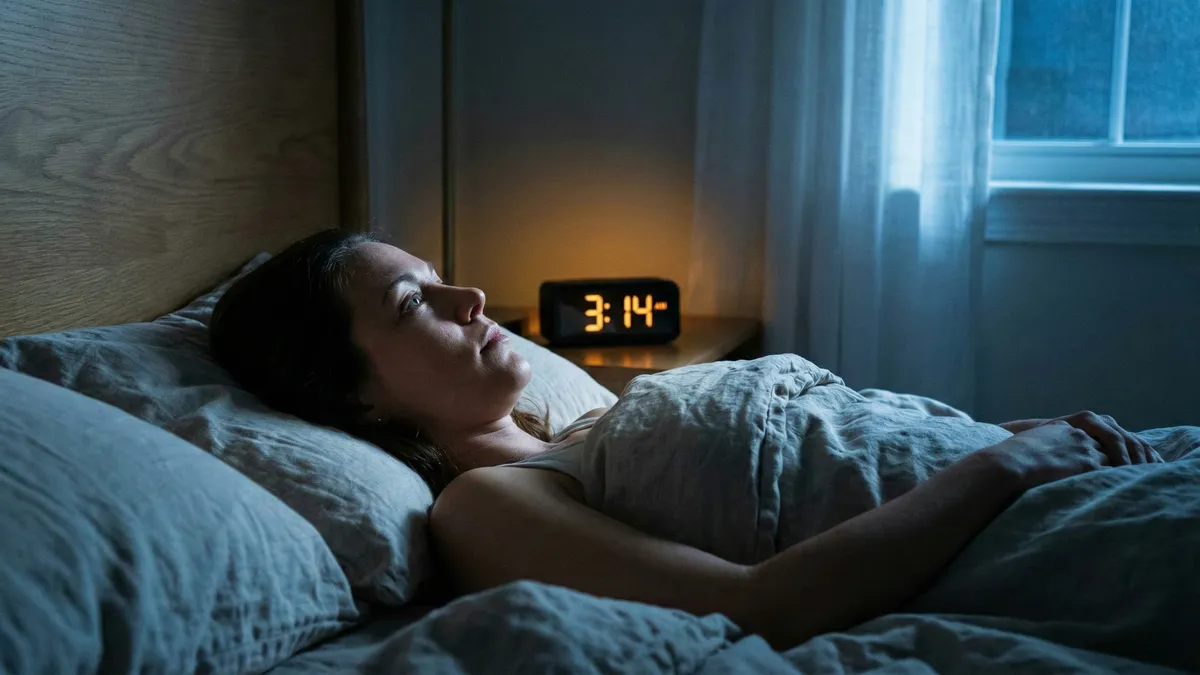
My lower back started giving me serious trouble about three years after my divorce — probably stress-related initially, then entrenched by the fact that I was sleeping terribly and working hunched over a laptop at a bad angle for eighteen months. The pain kept me awake. Being kept awake made the pain worse the next day. Being in more pain the next day meant I was more anxious at bedtime, which made sleep harder again. It was a perfect, miserable loop.
I didn't understand it as a loop at the time. I thought I had a back problem and I thought I had a sleep problem, and I was treating them as two separate things to manage. It wasn't until I read Smith and Haythornthwaite's work on the bidirectional relationship between pain and sleep that I started understanding what was actually going on[1].
01 The Loop: How Pain and Sleep Damage Each Other
The relationship between chronic pain and sleep isn't one-way. It's not simply that pain causes bad sleep. Sleep deprivation independently causes increased pain sensitivity — and that increased sensitivity then makes sleep harder, and so on. Smith and Haythornthwaite reviewed this relationship across multiple chronic pain conditions and found consistent evidence for both directions[1].
Chronic Pain
Arousals, difficulty finding comfortable position, hypervigilance to sensation
Poor Sleep
Lowers pain threshold, increases central sensitization, reduces tolerance
What's important about this framing is that it changes where you intervene. If you're only trying to manage the pain — medications, physical therapy, topical treatments — you may be leaving the sleep half of the loop running. Improving sleep directly can break the cycle in ways that pain treatment alone often can't.
02 What's Happening in Your Nervous System
The mechanism connecting sleep loss to increased pain sensitivity isn't fully worked out, but several pathways have solid evidence behind them.
Central Sensitization
Sleep deprivation lowers the threshold at which pain signals are processed in the brain. The same stimulus produces a stronger pain response. This is measurable in experimental settings using heat and pressure pain thresholds.
Endogenous Opioid Suppression
Your brain's own pain-dampening system — involving natural opioids — is disrupted by sleep loss. You lose some of your built-in pain tolerance. This may explain why the same underlying injury feels worse on bad nights.
Glial Cell Activation
Sleep deprivation activates microglia and astrocytes — immune cells in the central nervous system — in ways that amplify pain signaling. This is a relatively newer finding that helps explain why sleep loss has such systemic effects on pain[2].
Inflammatory Markers
Insufficient sleep raises circulating levels of pro-inflammatory cytokines like IL-6 and TNF-alpha — compounds that are also elevated in many chronic pain conditions. Inflammation both causes and responds to pain.
"Shorter sleep was a stronger predictor of pain than pain was a predictor of shorter sleep."
— Aric Prather, UCSF, on longitudinal pain-sleep research
That quote points at something counterintuitive but clinically important: in some populations and some conditions, the sleep disruption may be driving the pain cycle more than the pain is driving the sleep disruption. If that's true for you, treating sleep first isn't just sensible — it may be the lever that finally works.
03 How Specific Conditions Interact With Sleep
The general bidirectional relationship plays out differently depending on the pain condition. Understanding your specific situation helps target interventions better.
Fibromyalgia
Perhaps the clearest case of the feedback loop. Fibromyalgia is characterized by central sensitization and widespread pain, and sleep disturbance is almost universal — often with disrupted slow-wave sleep in particular. Restoring deep sleep (even experimentally) reduces fibromyalgia symptoms. The condition may be partly caused by chronic sleep deprivation in susceptible individuals.
Osteoarthritis & Rheumatoid Arthritis
Joint inflammation causes pain that's often worst at night due to decreased movement and changes in inflammatory activity during sleep. Morning stiffness is a hallmark of both conditions. Sleep deprivation in arthritis patients consistently amplifies pain sensitivity and reduces the effectiveness of analgesics taken during the day.
Chronic Back Pain
Sleep position matters significantly here — but so does sleep quality. People with chronic back pain who improve their sleep architecture (more deep sleep, fewer awakenings) report reduced pain intensity even without changes to physical treatment. Anxiety about pain at night — hypervigilance — is a major mediator.
Headache Disorders
Migraine and chronic daily headache are tightly linked to sleep. Both too little and too much sleep trigger migraines. REM sleep changes are documented in chronic migraine. Sleep disorders like sleep apnea dramatically increase headache frequency — and treating the apnea often reduces headache burden substantially.
04 Breaking the Cycle: What the Evidence Supports
The good news is that this loop, despite being vicious, has multiple entry points. You don't have to fix the pain to fix the sleep, and you don't have to fix the sleep before addressing pain. The most effective approaches tend to attack both sides.
CBT-I for Chronic Pain Patients
Cognitive behavioral therapy for insomnia (CBT-I) is first-line treatment for insomnia even in healthy populations. In chronic pain patients, it's particularly valuable because it addresses both the behavioral sleep problems and the pain catastrophizing and hypervigilance that typically accompany them[3].
Multiple studies have now shown that CBT-I in chronic pain patients improves sleep outcomes AND pain outcomes — better than analgesic medications alone and better than either sleep or pain treatment in isolation. It's one of the clearest examples we have of treating sleep to treat pain.
The core components: sleep restriction therapy (consolidating sleep to improve efficiency), stimulus control (reassociating bed with sleep rather than pain), cognitive restructuring (addressing catastrophic thoughts about pain and sleep), and relaxation training.
Medication Timing
If you take analgesics, timing matters. Many NSAIDs and acetaminophen peak at 1-2 hours. Taking pain medication 60-90 minutes before your usual sleep time — rather than at bedtime — means it's working when you most need it. Discuss this with your prescriber; don't adjust on your own.
Sleep Position Adjustments
For back pain: a pillow between the knees (side sleeper) or under the knees (back sleeper) reduces spinal stress. For arthritis: avoid sleeping on affected joints. A body pillow gives more positioning flexibility. Firm mattresses aren't universally better — medium-firm is often cited for back pain.
Temperature Management
Heat relaxes muscles before sleep but can increase inflammation in some conditions. Cold packs on joints 20 minutes before bed reduce inflammatory swelling. A slightly cool sleeping environment (65-68°F) reduces overall inflammation and supports sleep onset independently.
Pre-Sleep Pain Routine
A gentle wind-down that addresses pain specifically — light stretching for back pain, gentle joint mobilization for arthritis — done 30 minutes before bed reduces nocturnal pain without the arousal that more vigorous exercise would create. Pair with relaxation breathing to lower pain-related anxiety.
Address Pain Catastrophizing
Catastrophizing — expecting pain to be unmanageable, ruminating about it at night — is one of the strongest psychological predictors of poor sleep in chronic pain patients. It's specifically targeted by CBT-I and also by acceptance and commitment therapy (ACT). Awareness alone helps, but working with a psychologist trained in chronic pain is more effective.
Treat Comorbid Sleep Disorders
Sleep apnea and restless leg syndrome are both more common in chronic pain populations. If you're waking up unrefreshed despite adequate time in bed, or have uncomfortable leg sensations at night, these warrant evaluation. Treating them can break the loop from the sleep side.
When to See a Specialist
If you've had chronic pain affecting sleep for more than three months, a sleep medicine specialist or a psychologist trained in chronic pain management can offer more targeted help than general advice. The combination of sleep medicine and pain psychology produces substantially better outcomes than either specialty working alone. Ask your primary care doctor for a referral — this combination is underused and underrated.
The loop is real, but it has weak points
I spent about eighteen months treating my back problem and my sleep problem as two separate battles with two separate tool kits. It wasn't until I started understanding them as one loop — and attacking the sleep side directly with CBT-I techniques — that things started improving for both.
The science here is pretty consistent: poor sleep amplifies pain. Improving sleep reduces pain. The loop works both ways, which means you can enter it from either side. But given that sleep loss causes measurable neurological changes that amplify pain sensitivity, sleep is often the higher-leverage target — especially if you've been managing the pain side for a long time without enough progress.
If your pain management isn't working as well as it should, ask yourself when you last had a genuinely good night's sleep. That gap might be the answer.
Sources & Further Reading
- "How do sleep disturbance and chronic pain inter-relate? Insights from the longitudinal and cognitive-behavioral clinical trials literature." Sleep Medicine Reviews, 8(2), 119-132. (2004) PubMed →
- "Activated microglia contribute to the maintenance of chronic pain after spinal cord injury." Journal of Neuroscience, 26(16), 4308-4317. (2006) PubMed →
- "The association of sleep and pain: an update and a path forward." Journal of Pain, 14(12), 1539-1552. (2013) PubMed →
- "A randomized controlled trial of cognitive-behavioral therapy for insomnia in chronic pain." Journal of Pain, 18(9), 1090-1101. (2017) PubMed →
- "The bidirectional association between depression and insomnia: the HUNT study." Psychosomatic Medicine, 74(7), 758-765. (2012) PubMed →