
Key Takeaways
- Blue light is only part of the problem — the dopamine-reward loop of variable content is equally or more disruptive to sleep timing
- Social media and autoplay are engineered using slot machine psychology to keep you engaged past the point you intended to stop
- Doomscrolling elevates cortisol in the hour before bed, making falling asleep slower and lighter
- Solutions that work: charging stations outside the bedroom, app timers with friction, grayscale mode, and a deliberate wind-down swap
- Willpower alone doesn't work against systems designed by behavioral scientists — environment design beats self-discipline every time
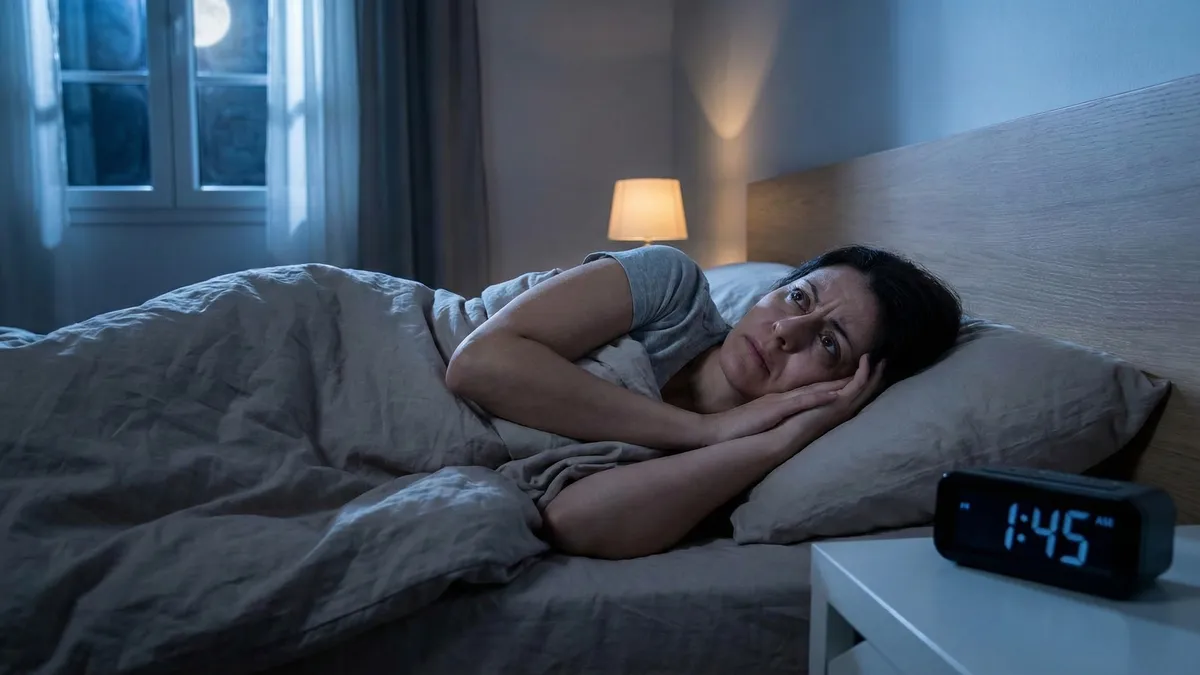
I used to think I was just bad at putting my phone down. I'd lie there with every intention of stopping at 10:30, and suddenly it would be 1am and I'd be watching a video essay about the economics of medieval wool production. I hadn't even meant to start the video. I just kept scrolling until it appeared, and then I couldn't not watch it.
Took me an embarrassingly long time to realize this wasn't a willpower problem. It was a design problem. The phone I was holding was built by some of the best behavioral scientists on earth to be as difficult to put down as possible. I was bringing a vague intention to bed, and it was competing with a billion-dollar engagement machine.
The blue light thing you've already heard about. Let me tell you about the parts that are less discussed — and harder to fix.
01 It's Not Just Blue Light (That's the Smaller Problem)
Every article about screens and sleep leads with blue light. Blue wavelengths suppress melatonin. That's real. The research supporting it is solid[1]. But here's what the blue light narrative misses: it's primarily about timing, not quality. Exposure to bright light in general — any color — signals daytime to your brain. The blue wavelength sensitivity is one mechanism, not the whole story.
More importantly, blue light doesn't explain why you stayed on your phone until 1am when you meant to stop at 10:30. It doesn't explain why you picked up the phone in the first place when you woke at 3am and really, genuinely intended to go back to sleep. Blue light is a physical problem with a physical solution (dim the screen, use warm tones). The engagement architecture of social media and streaming is a psychological problem of a different order.
The Blue Light Problem
- Suppresses melatonin production
- Delays circadian phase shift
- Affects sleep timing
- Manageable with settings changes
The Engagement Architecture Problem
- Variable reward loops keep you scrolling
- Cortisol spike from social comparison
- Autoplay removes decision points
- Requires behavioral change, not a setting
02 Your Phone is a Slot Machine (Built by Very Smart People)
This isn't a metaphor. Former Google design ethicist Tristan Harris has been public about the deliberate application of slot machine psychology to social media feeds. The core mechanic is variable reward: unpredictable rewards keep animals (and humans) engaged far more persistently than predictable ones[2].
When you pull down to refresh your feed, you don't know if you'll get something interesting or nothing. That uncertainty is the mechanism. Your dopamine system doesn't fire on reward. It fires on the anticipation of possible reward. Scroll, maybe something interesting. Scroll again. Maybe. Maybe. There it is — a funny video, an argument you want to weigh in on, a friend's news. Your dopamine system says: keep going, the next one might be even better.
"A slot machine is the only product that, if it worked perfectly, you'd be broke and empty. We've built that into every pocket."
— Tristan Harris, former Google design ethicist
This system doesn't care about your bedtime. It doesn't register that you said you'd stop at 10:30. It's optimized for one metric: time-on-platform. And the people building it have PhD-level understanding of the behavioral mechanics that keep you there.
Autoplay is the same principle applied to video. The decision not to watch the next episode is harder than the decision to start. Netflix's autoplay countdown exploits the default bias (it's easier to let the thing continue than to actively stop it). By the time you realize you're watching episode four, it's midnight and your alarm goes off in six hours.
03 Doomscrolling, Cortisol, and Why News Before Bed Is a Bad Idea
There's a second mechanism at work beyond dopamine: cortisol. The stress hormone that your body needs to stay low in the evening in order for sleep to happen.
News feeds — both curated media and social media — are optimized to generate emotional engagement. Anger, outrage, anxiety, and tribal threat all drive engagement metrics. Platforms have found that content generating emotional arousal gets more shares, more comments, more time-on-platform. The result is that your average social media feed at 10pm is a curated selection of whatever is most likely to make you feel threatened, outraged, or anxious[3].
Social comparison is another cortisol trigger. Seeing curated highlights of other people's relationships, careers, bodies, and accomplishments before bed reliably generates a mild stress response. It's not catastrophic — but it's enough to raise arousal past the threshold sleep requires. You're not as tired as you should be. You don't feel like sleeping. So you scroll more.
04 What Actually Works (Hint: Not Willpower)
I spent a year trying to solve this with self-discipline. "I'll just stop at 10:30." "I'll just not pick it up when I wake at 3am." Every sleep hygiene article I read said the same thing: put the phone down. None of them acknowledged that you are trying to stop a behavior that has been specifically engineered to resist stopping.
Willpower is a limited cognitive resource. Behavioral design is an unlimited engineering resource. You cannot out-willpower a system optimized by behavioral scientists. You have to change the environment.
Charging Station Outside Bedroom
This is the single most effective intervention. If the phone is in another room, you can't pick it up at 3am. You can't check it "one last time" before sleep. The friction of getting up to get it is usually enough. Get an old-school alarm clock.
App Timers With Friction
Most phones let you set app timers that lock specific apps after a time limit. The key is making the bypass annoying enough that you don't do it reflexively. On iPhone: Screen Time passcode set by someone else is harder to bypass than one you set yourself.
Grayscale Mode
Switch your phone to grayscale in the evening. Color is part of what makes social media feeds visually engaging. Grayscale makes the experience noticeably less stimulating. Not a magic fix, but reduces the pull enough to notice.
The 30-Minute Wind-Down Swap
Replace phone time with something that's engaging enough to not feel like deprivation, but low-arousal. Physical books, podcasts without visuals, light music, journaling. The replacement needs to actually satisfy the "I want something to do" impulse, not just suppress it.
Do Not Disturb Scheduling
Scheduled Do Not Disturb silences notifications automatically after a set time. Doesn't stop you from opening apps, but removes the pull of notification banners. Reducing interruption prompts during the evening reduces how often you pick the phone up.
Blue Light Glasses Alone
Addresses the lesser problem while leaving the larger one intact. You'll still stay up until 1am doomscrolling in orange-tinted glasses. Address the engagement architecture first, then worry about wavelengths.
05 The Bedroom as a Screen-Free Zone (What That Actually Requires)
The sleep hygiene advice to keep screens out of the bedroom is sound. Implementing it requires acknowledging what you're actually giving up and finding replacements that work.
Most people's resistance to bedroom phone bans isn't laziness. The phone does things they need: it's their alarm, it's how they contact family in an emergency, it's how they read when they can't sleep, it's how they watch something to wind down. You can't just remove it without replacing those functions.
The replacements feel inferior at first. A paper book isn't as immediately stimulating as TikTok. That's not a bug — it's the point. You want the wind-down period to be lower stimulus, not higher. The brain needs a ramp down, not a cliff edge from bright engaging content to trying to sleep.
The Statistics Worth Knowing
A 2019 Common Sense Media survey found that 36% of teens sleep with their phone in their bed. Studies of adults show phone use within 30 minutes of sleep is associated with an average 38-minute delay in sleep onset and reduced total sleep time — even when controlling for content type. The phone in the bedroom, regardless of whether you use it, creates anticipation that elevates arousal.
The honest version of this
I work in tech. I understand why these products are built the way they are, and I still find myself on my phone at midnight when I meant to stop at 10:30. This is not a personal failing. It's the designed outcome of products built to maximize engagement.
The solutions that worked for me weren't about trying harder. They were about removing the option from the environment: phone out of the bedroom, app timers with actual friction, a book I was actually interested in on the nightstand. When the choice architecture changed, the behavior changed.
You cannot willpower your way to better sleep hygiene against a product designed by hundreds of engineers to be as difficult to stop using as possible. Change the environment. Remove the friction for sleep, add friction for the phone. The rest follows.
Sources & Further Reading
- "Evening use of light-emitting eReaders negatively affects sleep, circadian timing, and next-morning alertness." Proceedings of the National Academy of Sciences, 112(4), 1232-1237. (2015) PubMed →
- "Neuronal reward and decision signals: from theories to data." Physiological Reviews, 95(3), 853-951. (2015) PubMed →
- "Sleeping with technology: cognitive, affective, and technology usage predictors of sleep problems among college students." Sleep Health, 2(1), 49-56. (2016) PubMed →
- "The association between social media use and sleep disturbance among young adults." Preventive Medicine, 85, 36-41. (2016) PubMed →