

Key Takeaways
- Aim for 60-67°F (15-19°C) in your bedroom — that's the range where most adults sleep best
- Your core temperature drops 2-3°F as you fall asleep, and that drop is what actually makes you drowsy
- A warm bath before bed sounds backwards, but it speeds up the cooling that triggers sleep
- Your feet and hands dump heat — warming them up helps your core cool down faster
- A difference of 2-3 degrees in room temperature can measurably change your sleep quality
My AC broke in August 2021. I bought a $30 box fan, pointed it at my bed, and had the best sleep of my adult life. That's the night I became a thermostat nerd.
I'm serious. I'd spent months trying melatonin, blue-light glasses, white noise machines, meditation apps. Nothing moved the needle. Then my air conditioner died, I stuck a fan in the window pulling in cool night air, and I woke up after seven and a half hours feeling like a different person. I started measuring. I bought a thermometer. I logged bedroom temps against sleep tracker data for three months straight.
Temperature was the variable. By a lot. And the science backs this up completely.
01 The Science of Body Temperature and Sleep
Your body temperature runs on a 24-hour cycle. It rises in the morning, peaks in the early afternoon, and starts dropping in the evening. This rhythm is tightly coupled to your sleep-wake cycle — Kräuchi's 2007 research in Sleep Medicine Reviews mapped this connection in detail[1].
The Daily Temperature Cycle
Here's the thing that surprised me: it's not about being cold. It's about getting colder. The rate of temperature decline is the signal. When your core temp drops fast, your brain reads that as "time to shut down." When it stays flat, your brain doesn't get the memo.
02 The Optimal Bedroom Temperature
Multiple studies land in the same range:
Optimal range for most adults
That probably sounds cold. It did to me. I used to keep my apartment at 72°F year-round and thought that was normal. When I first set my thermostat to 65°F, I thought there was no way I'd fall asleep. I was out in twelve minutes. My sleep tracker confirmed it — deep sleep jumped 22% that first week.
Factors That Shift Your Number
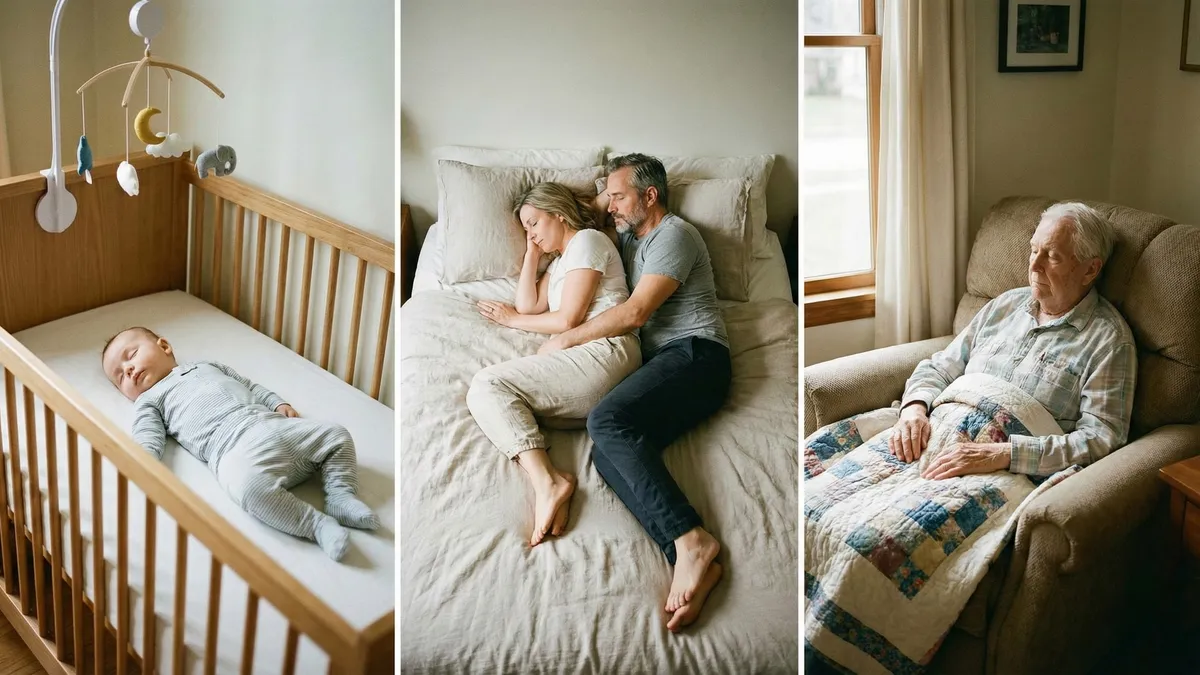
- Age: Older adults tend to need it slightly warmer — 65-68°F is common
- Body composition: Lower body fat means you'll probably prefer the warmer end of the range
- Bedding: A thick duvet lets you push room temp lower
- Sleeping partner: Two bodies generate a lot of heat — separate blankets are underrated
- Medical conditions: Menopause and thyroid disorders change how you perceive temperature entirely
"For every degree the room temperature rises above 65°F, the odds of poor sleep increase by about 2%."
— Haghayegh et al., Sleep Medicine Reviews, 2019
Two percent per degree doesn't sound like much until you do the math. A room at 73°F? That's roughly 16% worse odds of decent sleep compared to 65°F. And most people I talk to are sleeping at 72-74°F.
03 Why Cooling Works
When your core temperature drops, it kicks off a cascade of physiological changes. Each one pushes you closer to sleep.
Melatonin Release
The temperature decline tells your pineal gland to ramp up melatonin production. This is your body's own sleep hormone, on its own schedule — no supplement needed.
Heart Rate Drops
Cooler temps bring down heart rate and blood pressure. Your nervous system shifts into parasympathetic mode — the "rest and digest" state.
Vasodilation
Blood vessels in your hands and feet widen to dump heat. That's why your extremities get warm right before you fall asleep. It's your body's radiator system.
Metabolic Slowdown
A cool room helps your metabolic rate drop. Less energy burning means your body can commit more resources to repair and deep sleep.
The Warm Bath Paradox
This is my favorite piece of sleep science because it sounds completely wrong.
Take a warm bath 1-2 hours before bed. When you get out, the warm water has pulled blood to your skin's surface. Now that blood is exposed to cooler air, and your core temperature plummets. Haghayegh et al. ran a meta-analysis across 5,322 participants and found this can cut the time it takes to fall asleep by up to 36%[2]. Thirty-six percent. From a bath.
The Bath Protocol That Works
Water temperature: 104-109°F (40-43°C). Stay in for 10-15 minutes. Do it 1-2 hours before bed — not right before. Your body needs time to cool.
04 Practical Tips for Temperature Optimization
Set Your Thermostat
Program it to hit 65°F by the time you get into bed. No programmable thermostat? A fan does the job. I used a box fan for a year before upgrading.
Warm Your Feet
Yes, really. Warm feet dilate blood vessels, which dumps heat from your core. Socks to bed. Heating pad on your feet for ten minutes. It works.
Pick Natural Bedding
Cotton, linen, and wool breathe. Polyester traps heat like a garbage bag. In summer, a cooling mattress pad is one of the better investments I've made.
Layer Your Blankets
Several thin layers beat one thick comforter. You can kick off a layer at 3am without waking up fully. Fine-tuning without the thermostat.
Take a Warm Shower
No bathtub? A warm shower 60-90 minutes before bed triggers the same cooling rebound. Just make sure it's warm, not lukewarm.
Stick a Foot Out
You already do this instinctively. One foot outside the blanket is your body trying to thermoregulate. Let it.
05 Common Temperature Mistakes
Too Warm = Poor Sleep
Above 70°F, your core can't drop enough to trigger deep sleep. You feel cozy getting in. Then you toss and turn at 2am. Sound familiar?
Sleeping in Heavy Clothes
Thick pajamas trap heat against your skin. Your body can't radiate it away. Light cotton or nothing at all lets thermoregulation do its thing.
Electric Blankets All Night
Great for warming the bed before you get in. Terrible if you leave them on. They block the temperature decline your body needs during the night.
Ignoring Hot Flashes
Night sweats and hot flashes mean your thermoregulation is already disrupted. You need to go harder on cooling — moisture-wicking sheets, a cooling pillow, lower room temp.
Buy a Thermometer. Seriously.
Temperature is the most underrated sleep variable and the easiest one to fix. You don't need a $200 supplement stack or a sleep coach. You need a thermostat set to 65°F and maybe a $30 fan.
I tell everyone the same thing: get a cheap thermometer, put it on your nightstand, and log the temperature when you sleep well versus when you don't. You'll see the pattern in three days. I guarantee it.
This is the one sleep hack that actually deserves the word "hack." Turn down the thermostat tonight and see what happens.
Sources & Further Reading
- "The thermophysiological cascade leading to sleep initiation in relation to phase of entrainment." Sleep Medicine Reviews, 11(6), 439-451. (2007) PubMed →
- "Before-bedtime passive body heating by warm shower or bath to improve sleep: A systematic review and meta-analysis." Sleep Medicine Reviews, 46, 124-135. (2019) PubMed →