Key Takeaways
- Melatonin is for timing problems (jet lag, shift work), not general insomnia. 0.5-1mg works. The 10mg gummies are overkill
- Magnesium has real evidence behind it, especially glycinate. The catch: it works best if you're actually deficient
- L-theanine shows promise for anxiety-driven sleep problems, but it's subtle, not sedating
- Most herbal stuff (valerian, passionflower) has weak and inconsistent evidence despite centuries of folk use
- CBT-I (behavioral therapy) beats every supplement on this list for chronic insomnia. Not even close
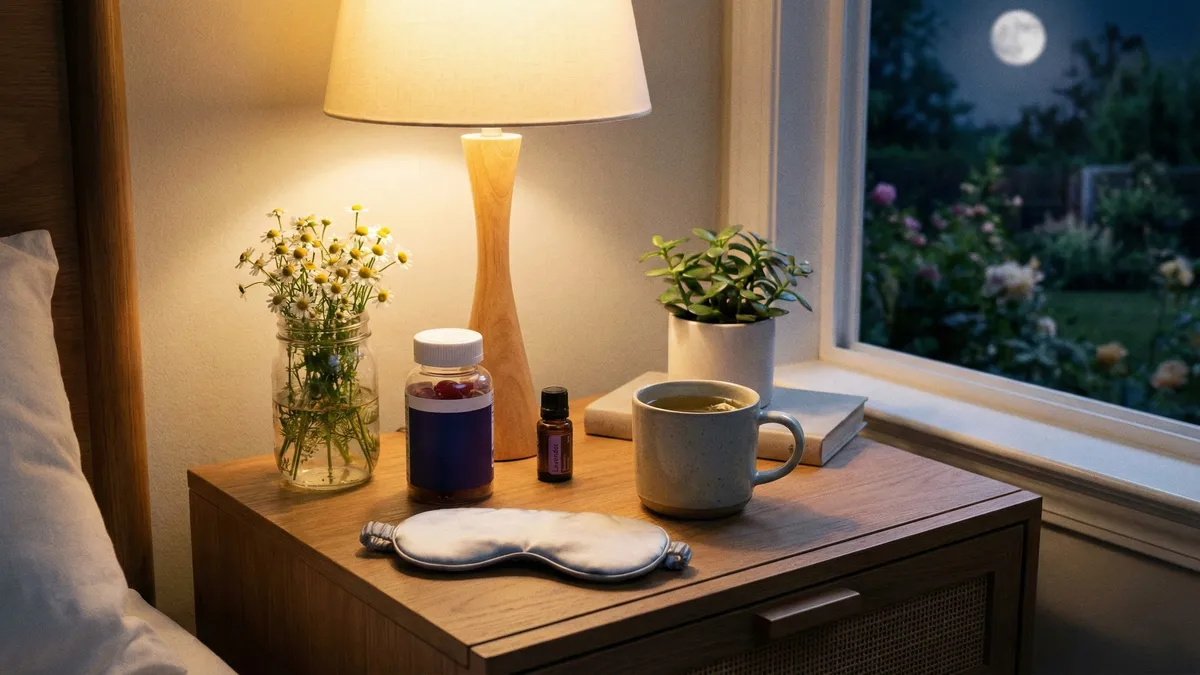
I have a drawer in my nightstand that I'm embarrassed to open in front of guests. It's a graveyard of half-used supplement bottles — melatonin, magnesium, valerian, CBD, ashwagandha, GABA, L-theanine, passionflower. Each one purchased during some desperate 2am Amazon binge, each one promising to be the thing that finally fixed my sleep.
Most of them didn't do anything. A couple actually helped. One gave me the most bizarre dreams of my life. The supplement industry is mostly unregulated, frequently overpromising, and happy to take your money whether the product works or not. So I went through the actual research to figure out what holds up and what's marketing dressed as science.
01 How I Ranked These
Three things mattered for each supplement:
Evidence Quality
Are there randomized controlled trials? How big? Did anyone bother to replicate the results?
Effect Size
Statistical significance is one thing. Falling asleep 5 minutes faster is another. Does it actually matter in your life?
Safety Profile
Side effects, drug interactions, long-term unknowns. The stuff the label doesn't mention.
02 Tier A: Solid Evidence
These two have real studies behind them. Multiple, well-designed, replicated. That's a higher bar than most supplements clear.
Melatonin
Tier AHere's the thing people get wrong about melatonin: it's not a sedative. It's a timing signal. Your body already makes it when darkness falls. Supplementing it tells your brain "hey, nighttime is now" — it doesn't knock you out.
Best For
- Jet lag recovery (a 2002 Cochrane review by Herxheimer & Petrie confirmed this pretty clearly[1])
- Shift work adjustment
- Delayed sleep phase — you're a night owl and need to move your bedtime earlier
- Older adults, whose natural melatonin production drops off
Less Effective For
- General insomnia (waking up at 3am and staring at the ceiling)
- Making your sleep feel deeper or more restful
- Anxiety-driven sleeplessness
Dosage Notes
Less is more. This is the supplement where the industry has gone completely off the rails. Those 10mg gummies at the drugstore? Wildly overdosed. A 2017 meta-analysis in Sleep Medicine Reviews (Auld et al.) found that 0.5-1mg works about as well as higher doses, with fewer side effects[2]. More is not better here. Higher doses cause morning grogginess and might desensitize your receptors over time.
Timing matters: Take it 1-2 hours before you want to sleep. Not as you're climbing into bed.
Side Effects
Safe short-term for most people. Vivid dreams are common (sometimes entertainingly so), morning grogginess if you took too much, occasional headaches. Long-term effects haven't been well studied, which is worth keeping in mind.
Magnesium
Tier AMagnesium does a lot of jobs in your body — hundreds of them, including helping regulate the neurotransmitters that calm your nervous system down. A lot of people are deficient without knowing it, especially if your diet leans processed. A 2012 study by Abbasi et al. in the Journal of Research in Medical Sciences found real improvements in insomnia symptoms in older adults who supplemented[3].
Best For
- People with low magnesium (more common than you'd think on a typical Western diet)
- Restless legs syndrome
- That wired-but-tired feeling where your muscles won't unclench
- Stress-related sleep problems
Form Matters
- Magnesium glycinate: Best absorbed, most calming. This is the one I take
- Magnesium citrate: Absorbs well, but fair warning — it's also a laxative
- Magnesium oxide: Cheap. You get what you pay for. Poorly absorbed
- Magnesium L-threonate: Crosses the blood-brain barrier, but it's expensive
Dosage Notes
200-400mg of elemental magnesium before bed. Start on the low end and see how your stomach handles it. Glycinate and threonate are the best forms for sleep specifically.
Side Effects
Safe for most people. Too much can cause digestive trouble (citrate and oxide are the worst offenders). Check with your pharmacist if you're on antibiotics or blood pressure meds.
03 Tier B: Promising Evidence
These have positive research, but the studies tend to be smaller, results are mixed, or they only seem to work for certain people. Not junk science, but not slam dunks either.
L-Theanine
Tier BThis is the amino acid in green tea that makes you calm without making you sleepy. It bumps up alpha brain waves and GABA activity — a 2019 study by Kim et al. in Pharmaceutical Biology found that a GABA/L-theanine combo decreased sleep latency and improved non-REM sleep[4].
Best For
- The "can't shut my brain off" problem at bedtime
- Anxiety-driven difficulty falling asleep
- Pairing with caffeine during the day (takes the jittery edge off)
Key Research
Shows improved sleep quality in people with anxiety and ADHD. But I want to be honest: the effect is gentle. If you're expecting to feel sedated, you'll be disappointed.
Dosage Notes
100-400mg before bed. You can also take it during the day — it won't make you drowsy, just less wound up.
Glycine
Tier BAn amino acid that appears to lower your core body temperature — which is one of the signals your body uses to initiate sleep. Bannai & Kawai published a 2012 paper in the Journal of Pharmacological Sciences laying out how it acts on calming neurotransmitter pathways[5]. Interesting mechanism. Limited data.
Best For
- People who feel like their sleep is shallow or unrefreshing
- Waking up exhausted despite sleeping enough hours
- Hot sleepers (the temperature drop may help)
Key Research
A few Japanese studies found improved sleep quality scores and less next-day fatigue. The problem: not much replication in Western labs yet. Promising but incomplete.
Dosage Notes
3g before bed. It's slightly sweet — you can just stir it into water. Not unpleasant.
Ashwagandha
Tier BAn Ayurvedic herb that's been trending hard in the wellness space. The actual evidence? It lowers cortisol and reduces anxiety. A 2019 study by Langade et al. in Cureus found improvements in sleep quality, but the sleep benefits seem to be a side effect of stress reduction rather than a direct sedative action[6].
Best For
- Can't sleep because your brain won't stop running your to-do list
- People with high cortisol (chronic stress)
- General anxiety that bleeds into bedtime
Caution
Skip this if you have thyroid issues — it can affect thyroid hormone levels. Also not safe during pregnancy or while nursing.
Dosage Notes
300-600mg of root extract standardized to withanolides, taken in the evening. Don't expect overnight results — this one builds up over weeks.
04 Tier C: Weak or Inconsistent Evidence
This is where most of the supplement aisle lives. Popular, heavily marketed, and lacking the research to back up the claims on the bottle.
Valerian Root
Mixed ResultsValerian has been studied more than almost any other herbal sleep aid. The problem is the results are all over the place. A 2006 meta-analysis by Bent et al. in the American Journal of Medicine concluded that the evidence was inconclusive[7]. Some small trials found modest benefits. Others found nothing. It may take 2-4 weeks to do anything at all. Also, it smells terrible. I gave up after a week.
Passionflower
Limited StudiesThere's some data suggesting it reduces anxiety, but quality sleep studies? Barely any. It's almost always bundled with other herbs in commercial products, which makes it impossible to tell what's actually doing the work.
GABA (Oral)
Absorption IssuesGABA is your brain's main "calm down" neurotransmitter, so supplementing it sounds logical. The catch: oral GABA doesn't cross the blood-brain barrier very well. It's like trying to deliver a package but the door is locked. Some stress-reduction benefits in studies, but sleep-specific evidence is thin.
Chamomile
Mild at BestYour grandmother's sleep remedy. Clinical evidence for chamomile and sleep is basically nonexistent. I suspect the benefit is the ritual — making tea, sitting quietly, winding down — rather than anything pharmacological. Harmless, though. Drink it if you enjoy it.
Lavender (Oral)
Anxiety, Not SleepSilexan (lavender oil capsules) actually has decent anxiety evidence, but that's not the same as sleep evidence. The aromatherapy studies are mostly low-quality. Lavender on your pillow probably won't hurt. It also probably won't change your sleep architecture.
05 Tier D: Skip These
Either the evidence isn't there, the safety profile is concerning, or there are just better options. Save your money.
Diphenhydramine (Benadryl, ZzzQuil)
Technically not a supplement, but so many people use it for sleep that it belongs here. Tolerance builds fast. You feel foggy the next day. And a 2015 study by Gray et al. in JAMA Internal Medicine linked cumulative anticholinergic use — including diphenhydramine — to increased dementia risk[8]. Not worth it as a sleep aid. Period.
Kava
Has real anxiety-reducing properties, but also real liver toxicity concerns. Several countries have banned or restricted it. When safer alternatives exist — and they do — the risk-reward math here doesn't work.
5-HTP
It's a serotonin precursor, which sounds like it should work. It doesn't, at least not for sleep. The evidence is thin. And if you're on SSRIs or any other serotonergic medication, combining them with 5-HTP risks serotonin syndrome. Hard pass.
CBD
I really wanted this one to work. It didn't. The research studies that show positive results use doses around 300mg or higher — far more than what's in the typical overpriced tincture at your local wellness shop. It might take the edge off anxiety, which could indirectly help. But as a direct sleep aid? The data just isn't there yet.
"The best predictor of whether a supplement 'works' is whether you believe it will. Placebo effects in sleep studies are enormous."
— Dr. Michael Grandner, Sleep Researcher
06 Safety Notes
Supplements Aren't Regulated Like Drugs
This is the part that genuinely bothers me. What's printed on the label may not match what's actually in the pill. A 2015 study found that some melatonin products contained up to 478% of their listed dose. Use brands that do third-party testing through NSF, USP, or ConsumerLab.
Drug Interactions Are Real
Sleep supplements can interact with blood thinners, sedatives, antidepressants, and other medications in ways that aren't always obvious. Talk to a pharmacist. They're free and they know this stuff cold.
Don't Stack Without Guidance
I've seen people take melatonin plus magnesium plus valerian plus CBD "just to be safe." That's not safe. Combining sedating substances amplifies effects unpredictably. Try one thing at a time.
Address the Root Cause
Supplements are band-aids. I spent years sticking band-aids on my insomnia. If your sleep has been bad for more than a month, a supplement isn't going to fix the underlying problem. CBT-I (cognitive behavioral therapy for insomnia) outperforms every supplement on this list. It's not even close.
What I'd Put Back in the Drawer (and What I'd Keep)
Look, most of what's in my nightstand drawer is junk. I've accepted that. Melatonin works — but only for timing problems, not "I can't sleep" problems, and only at doses way lower than what's typically sold. Magnesium glycinate is the one I actually still take. It's one of the few where the mechanism makes sense and the evidence backs it up, especially if your diet is lacking. L-theanine is worth a shot if anxiety is the thing keeping you up.
The rest? Centuries of folk wisdom, sure. But when you put them through real clinical trials, the results are underwhelming. Valerian, passionflower, chamomile, CBD — I've tried them all. They live in the drawer now, gathering dust.
If you're a few bad nights in, a supplement might help at the margins. If you've been battling this for weeks or months, the fix isn't in a bottle. It's in your habits, your bedroom environment, your relationship with screens at midnight — the boring stuff that actually works. And if none of that helps, talk to someone about CBT-I. I wish I'd done it years before I did.
Sources & Further Reading
- "Melatonin for the prevention and treatment of jet lag." Cochrane Database of Systematic Reviews. (2002) PubMed →
- "Evidence for the efficacy of melatonin in the treatment of primary adult sleep disorders." Sleep Medicine Reviews, 34, 10-22. (2017) PubMed →
- "The effect of magnesium supplementation on primary insomnia in elderly." Journal of Research in Medical Sciences, 17(12), 1161-1169. (2012) PubMed →
- "GABA and l-theanine mixture decreases sleep latency and improves NREM sleep." Pharmaceutical Biology, 57(1), 65-73. (2019) PubMed →
- "New therapeutic strategy for amino acid medicine: glycine improves the quality of sleep." Journal of Pharmacological Sciences, 118(2), 145-148. (2012) PubMed →
- "Efficacy and Safety of Ashwagandha Root Extract in Insomnia and Anxiety." Cureus, 11(9), e5797. (2019) PubMed →
- "Valerian for sleep: a systematic review and meta-analysis." American Journal of Medicine, 119(12), 1005-1012. (2006) PubMed →
- "Cumulative use of strong anticholinergics and incident dementia." JAMA Internal Medicine, 175(3), 401-407. (2015) PubMed →
Recommended Resources
- Examine.com - Sleep Supplements Guide (evidence-based analysis)
- ConsumerLab.com - Third-party testing of supplements
- Why We Sleep by Matthew Walker (Chapter on sleep aids)